
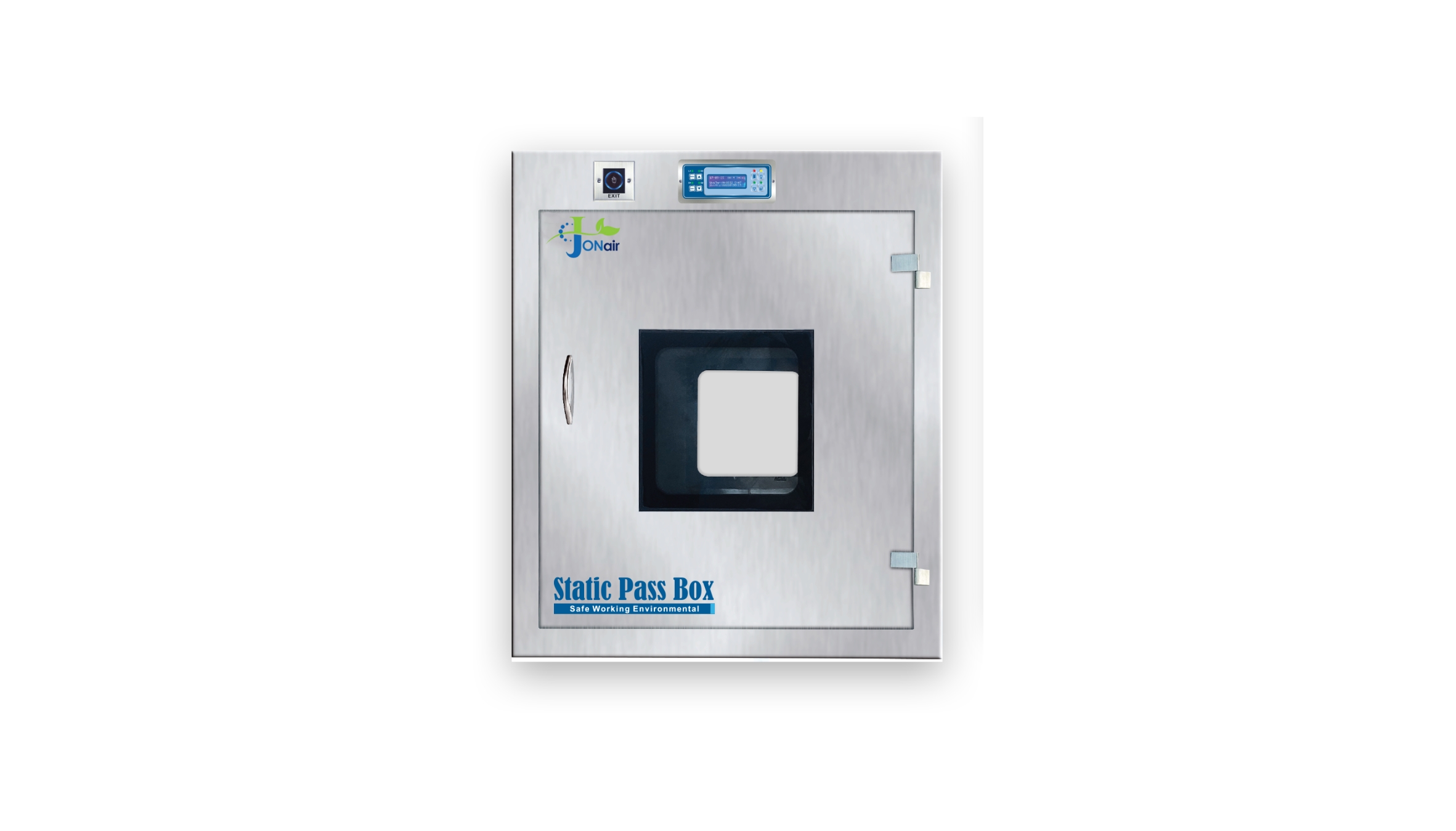
Static Pass Box
Key Features
- Premium Quality Manufacturing
- Built with International Quality Standards
- High Performance & Long Service Life
- Energy Efficient Design
Product Description
A Pass Box can facilitate material transfer with minimal physical contact between workers. In addition, the Static Pass Box is a barrier to introducing contaminants into clean rooms and other secure locations. Pass box static is built to restrict access to the sterile area and keep out potential contaminants. When moving materials between clean rooms, use our Clean Room Pass Box, built to international standards.
A static pass box can help you keep your clean room pristine without breaking the bank. The electromagnetic interlocking on these containers allows only one door to open at a time, preventing contamination. These custom tools’ rigid base and stainless steel finish ensure peak performance. They feature an inert HEPA/ULPA air barrier and interlocking stainless steel construction.
CONSTRUCTION DETAILS
- Stainless steel was used in its construction.
- The pass box’s interior side walls are made of a single piece of stainless steel, and their corners are rounded off to be cleaned quickly and efficiently.
- Our pass box features a large glass viewing window on each hinged door, allowing easy access to documents or other items. Each of these doors is electrically interlocked to prevent simultaneous opening.
- Sealing the doors to the clean room with a rubber gasket at the feather’s edge is a sturdy and easy way to keep the airborne contaminants out.
- A HEPA filter, fluorescent and ultraviolet lighting, and more are all available.
What is a Static Pass Box?
A static pass box is a stainless-steel, pass-through transfer chamber used to move materials between two cleanrooms of the same cleanliness classification without opening both doors at once. It has no blower or HEPA filtration system — “static” simply means there is no forced airflow inside the chamber. Interlocked doors (mechanical or electromagnetic) ensure only one side opens at a time, which prevents cross-contamination and pressure loss between the connected rooms. Static pass boxes are widely used in pharmaceutical plants, hospitals, laboratories, and electronics cleanrooms as a cost-effective way to transfer documents, components, and materials without personnel movement.
Static Pass Box vs. Dynamic Pass Box
Both are pass-through chambers, but they are built for different jobs. A static pass box is a passive, unfiltered chamber for transfers between rooms of equal cleanliness class. A dynamic pass box adds a blower and HEPA/ULPA filtration to actively purge air inside the chamber, making it suitable for transfers between rooms of different cleanliness classes (for example, from a Grade D corridor into a Grade B cleanroom).
| Feature | Static Pass Box | Dynamic Pass Box |
|---|---|---|
| Airflow/filtration | None | HEPA/ULPA filtration with blower |
| Use case | Same cleanliness class on both sides | Different cleanliness classes on both sides |
| Interlock | Mechanical or electromagnetic | Electromagnetic/PLC-controlled, often with purge timer |
| Power required | No | Yes |
| Typical cleanroom grades | Grade C–D, ISO 7–8 (equal on both sides) | Grade A/B transfers, ISO 5–7 |
| Relative cost | Lower | Higher |
| Maintenance | Gasket, door, glass, interlock checks | Above + filter replacement, blower servicing |
| Best fit | Documents, small components, general materials between equal-grade rooms | Sterile materials entering aseptic/high-grade zones |
Key Features & Benefits
Features
- Interlocking doors (mechanical or electromagnetic) so only one side opens at a time
- Single-piece stainless steel interior with rounded (coved) corners for easy cleaning
- Gasket-sealed doors to block airborne particles at the seam
- Large glass viewing window for visual confirmation before opening
- Optional UV-C or fluorescent lighting inside the chamber
- Wall-mounted, flush-mount, or table-top installation options
Benefits
- Reduces personnel movement and repeated gowning between cleanrooms
- Lowers cross-contamination risk during material transfer
- Simple, low-maintenance design with no moving air-handling parts to service
- Cost-effective compared to dynamic units when both rooms share a cleanliness grade
- Supports GMP and ISO 14644 contamination-control practices
- Long service life due to corrosion-resistant stainless steel construction
Technical Specifications
Standard Sizes Static pass boxes are typically supplied in standard sizes and can be customized. Common internal chamber sizes include:
| Size (W x D x H, approx.) | Typical Use |
|---|---|
| 450 x 450 x 450 mm | Small components, documents |
| 600 x 600 x 600 mm | General laboratory/pharma transfers |
| 750 x 750 x 750 mm | Larger materials, multiple items |
| Custom sizes | Project-specific requirements |
Material Options: SS304 vs. SS316L
| Material | Corrosion Resistance | Typical Application |
|---|---|---|
| SS304 | Good | General pharmaceutical and laboratory cleanrooms |
| SS316L | Higher (molybdenum-alloyed) | Sterile/aseptic areas, aggressive cleaning agents, export-grade projects |
Interlocking System Options
- Mechanical interlock: simple, robust, no power dependency; suited to standard static applications
- Electromagnetic interlock: faster response, easier to integrate with access control or BMS monitoring; preferred in higher-compliance GMP settings
Industries & Applications
Static pass boxes are used wherever two adjoining spaces need to share the same cleanliness classification while limiting personnel and airborne cross-movement:
- Pharmaceutical manufacturing – transferring raw materials, components, and documentation between production and packing cleanrooms
- Hospitals and hospital pharmacies – moving supplies between sterile and non-sterile support areas of equal classification
- Biotechnology and research laboratories – transferring samples, glassware, and consumables between lab zones
- Electronics and semiconductor cleanrooms – passing components between assembly areas without breaching cleanroom integrity
- Cosmetics manufacturing – transferring raw materials and packaging components between production zones
- Food and beverage processing – limiting contamination during ingredient or packaging transfer between processing zones
Compliance & Cleanroom Standards
Static pass boxes support contamination-control requirements under ISO 14644-1 (cleanroom classification) and Good Manufacturing Practice (GMP) guidelines, including WHO-GMP and Schedule M requirements followed by Indian pharmaceutical manufacturers. In regulated pharmaceutical and hospital environments, pass boxes are typically included in facility qualification and validation programs — Installation Qualification (IQ), Operational Qualification (OQ), and Performance Qualification (PQ) — to document that the interlock, seals, and materials of construction perform as specified.
Because a static unit has no active air treatment, it is only appropriate where both connected rooms hold the same ISO/GMP classification. Where materials must move between rooms of different classifications, a dynamic pass box with HEPA filtration is the compliant choice.
Installation & Maintenance Guide
Installation Checklist
- Confirm wall opening dimensions match the unit’s flange/frame size
- Verify door swing clearance on both cleanroom sides
- Check that the gasket seats flush against the wall panel with no gaps
- Test the interlock mechanism before commissioning
- Record installation details for IQ documentation
Cleaning & Maintenance SOP
- Daily: Wipe interior stainless steel surfaces and glass windows with an approved cleanroom disinfectant
- Weekly: Inspect door gaskets for wear, tears, or compression loss
- Monthly: Test interlock function (only one door should open at a time) and check hinge alignment
- Quarterly/Annually: Full inspection of welds, corners, and lighting; re-validate as part of facility requalification if required by SOP
Common Problems & Troubleshooting
| Problem | Likely Cause | Recommended Action |
|---|---|---|
| Both doors seem to open together | Interlock mechanism worn or misaligned | Inspect and service interlock; do not operate until fixed |
| Door doesn’t seal fully | Gasket compression loss or debris on seal line | Clean seal line; replace gasket if worn |
| Visible corrosion or staining | Wrong material grade for chemical exposure, or damaged surface finish | Re-evaluate material grade (consider SS316L); repolish or replace panel |
| Glass window fogging/scratching | Condensation from humidity differential, or abrasive cleaning | Use non-abrasive cleaning agents; check room humidity control |
| Difficult door operation | Hinge wear or misalignment after heavy use | Lubricate/adjust hinges; inspect mounting frame |
Why Choose Getrus International as Your Static Pass Box Manufacturer
Getrus International designs and manufactures cleanroom equipment — including static and dynamic pass boxes, laminar air flow units, biosafety cabinets, and air showers — for pharmaceutical, laboratory, and industrial cleanroom projects. As a Static Pass Box Manufacturer, Getrus builds each unit around single-piece stainless steel construction, electromagnetically interlocked doors, and gasket-sealed access points, so facilities get a unit built for real cleanroom operating conditions rather than a generic enclosure. Because pass boxes are one part of a full cleanroom fit-out, Getrus also supplies complementary equipment — laminar air flow units, air showers, and filters — so facilities can source connected cleanroom systems from a single, accountable manufacturer.
Related Products & Further Reading
- Dynamic Pass Box — for transfers between cleanrooms of different classifications
- Air Shower — for personnel decontamination before cleanroom entry
- Vertical Laminar Air Flow — for localized ISO Class 5 workstations
- Horizontal Laminar Air Flow — for particle-sensitive bench work
- Clean Room Equipment and Filters — full cleanroom equipment range
- Certifications — Getrus manufacturing certifications
FAQs
1. What is a static pass box?
A static pass box is a stainless-steel transfer chamber with two interlocked doors, used to move materials between cleanrooms of the same cleanliness classification. It has no blower or filtration system — the interlock and gasket seal are what prevent contamination from moving between the connected rooms during transfer.
2. Where should a static pass box be used instead of a dynamic pass box?
Use a static pass box when both connected rooms share the same ISO/GMP classification, such as two production rooms of equal grade. If the rooms have different cleanliness levels, a dynamic pass box with HEPA filtration is required to actively control contamination during transfer.
3. What materials are static pass boxes made of?
Most static pass boxes are made from stainless steel — commonly SS304 for general pharmaceutical and laboratory use, or SS316L where higher corrosion resistance is needed, such as aseptic areas or environments using aggressive cleaning agents. Some budget models use powder-coated mild steel instead.
4. How is a static pass box installed?
A static pass box is usually installed flush into the wall between two adjoining cleanrooms of equal classification. Installation requires checking wall opening dimensions, door swing clearance on both sides, and ensuring the gasket line sits flush against the wall panel to prevent air leakage.
5. Why are the internal corners of a pass box rounded?
Rounded, or “coved,” internal corners remove sharp edges where dust, residue, or microorganisms could accumulate. This design makes the chamber easier and faster to clean thoroughly, which is important for maintaining cleanroom-grade hygiene standards.
6. What should I check before buying a static pass box?
Confirm that both connected rooms share the same cleanliness classification, select the correct material grade and interlock type for your process, size the chamber for your largest routine item, and confirm the manufacturer can support installation and validation documentation.
Ready to move forward?
If you’re planning a new cleanroom or upgrading an existing one, Getrus International can help you specify, customize, and install a static pass box suited to your exact classification and layout — reach out to our team for a project-specific recommendation and quote.
Get a Quote for your Static Pass Box Manufacturer, or explore our Clean Room Equipment range for a complete facility fit-out.
Call us: +91 9717076743
Email: info@getrusinternational.com
Products Might Be Helpful For You
Product Categories
Check out our huge range of product types. We've got special fixes and exact lab gear for all your science needs. Our big lineup stands out – it's top-notch and clever.