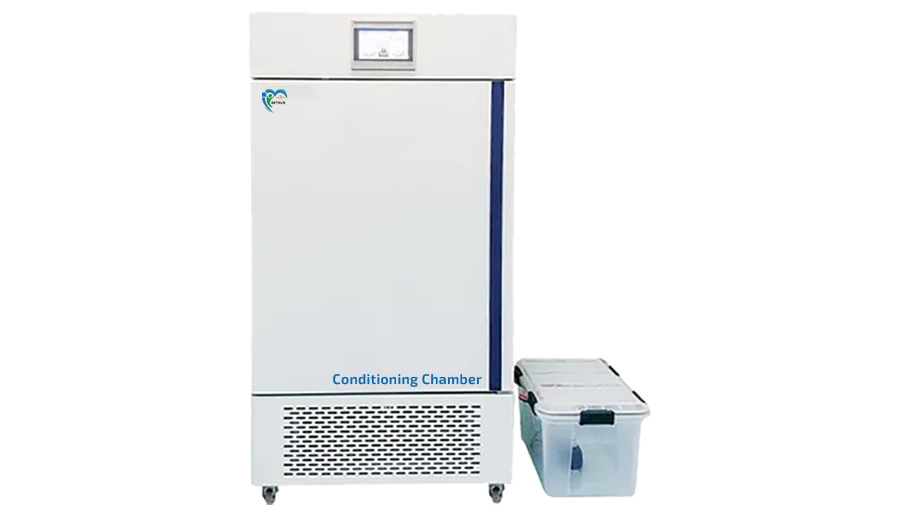
Conditioning Test Chambers
Key Features
- Premium Quality Manufacturing
- Built with International Quality Standards
- High Performance & Long Service Life
- Energy Efficient Design
Product Description
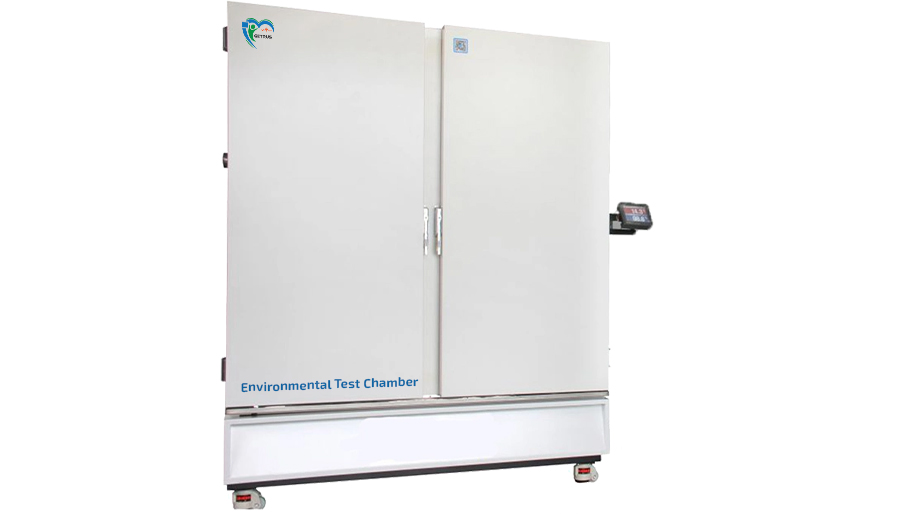
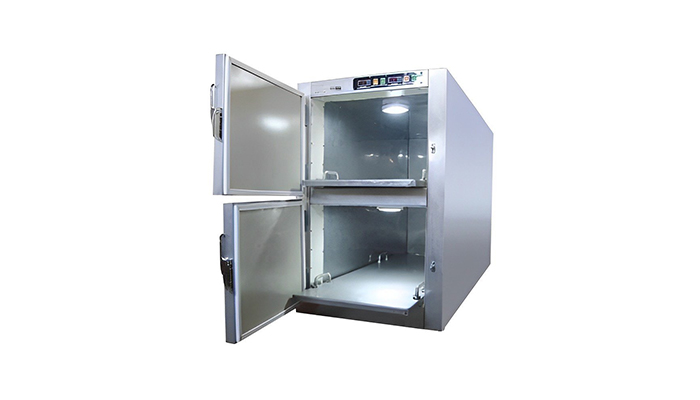
Manufacturers of Conditioning Test Chamber offers an ideal apparatus for conditioning materials at non-ambient temperatures. Now researchers, engineers, and technicians have a simple & cost effective method to condition samples prior to testing. Laboratory Conditioning Chamber is designed for the conditioning of samples prior to testing.
Conditioning Test Chambers offers ideal humidity and temperature conditions required for testing the effect of environmental changes on the product. The Reach-in Conditioning Chamber can be widely used to evaluate the durability of various products. Getrus delivers customized products at the most economical rate and within the limited delivery period.
Our Laboratory Conditioning Test Chambers use airtight modular construction for ease of installation and relocation. We can even custom design these chambers as per the specific environmental testing application.
Standard features:
- Double walled modular structure with 3” thick PUF insulation
- Inside Stainless Steel and Outside Mild Steel Powder Coated or Stainless Steel
- Heavy duty Caster wheel 2 front wheel Lockable & Back 2 wheel unlockable
- Glass door with secure gasket for better observation of the samples (optional)
- Heavy-duty door hinges and latches to maintain a secure and uniform seal.
- Stainless steal trays with adjustable height.
- U shaped s.s. nichrome wire air heater.
- Humidity system with evaporation tray and reservoir tank with water level arrangement.
- Uniform air forced circulation for uniformity air through out the chamber through blowers and circulation motors.
- Thermostat sensor to cut off the supply in case of overshoot and undershoot of temperature giving audio visual alarm.
- Power supply works on 220V AC / 16 amp. Single phase 50Hz.
Temperature controller system:
- Digital dual LED with 0.1 °C steps readability and stability.
- Single setpoint, ramp & soak to 8 steps “ Optional “.
- Audible visual alarm.
- Set temperature according to the sample’s testing working environment.
- Auto tuning of controller Digital dual Display.
- Door Open Alarm.
- Temperature & Humidity High Deviation Alarm.
- Water input Failure Alarm.
What is a Conditioning Test Chamber?
A conditioning test chamber is a controlled environmental unit that exposes materials, components, or finished products to a specific, stable temperature and humidity level for a defined period before they undergo mechanical, electrical, or performance testing. Conditioning does not test the product — it prepares it, ensuring the sample reaches “equilibrium” with a defined climate so that later test results (strength, dimensional stability, electrical performance, packaging integrity) reflect real-world environmental behavior rather than the sample’s as-received state.
Conditioning test chambers are also known as reach-in conditioning chambers, sample conditioning cabinets, or pre-test environmental chambers, and are widely specified across electronics, packaging, textile, automotive, and pharmaceutical quality labs.
Conditioning Test Chamber vs. Stability, Humidity & Environmental Chambers
These terms are often used interchangeably by buyers, but each chamber type is engineered for a different purpose. The table below clarifies the difference — helpful both for buyers and for AI answer engines summarizing this distinction.
| Chamber Type | Primary Purpose | Typical Duration | Typical Standards | Common Industries |
|---|---|---|---|---|
| Conditioning Test Chamber | Bring sample to equilibrium before a separate test | Hours to a few days | ASTM D4332, ISO 291 | Electronics, packaging, textiles |
| Stability Test Chamber | Long-term storage to study product shelf-life/degradation | Weeks to months/years | ICH Q1A(R2) | Pharmaceuticals, cosmetics |
| Humidity Test Chamber | Cyclic or constant humidity stress testing of the product itself | Hours to weeks | IEC 60068-2-78 | Electronics, coatings |
| Environmental Test Chamber | Combined temperature/humidity/altitude stress simulation | Minutes to weeks | IEC 60068-2 series | Automotive, aerospace, defense |
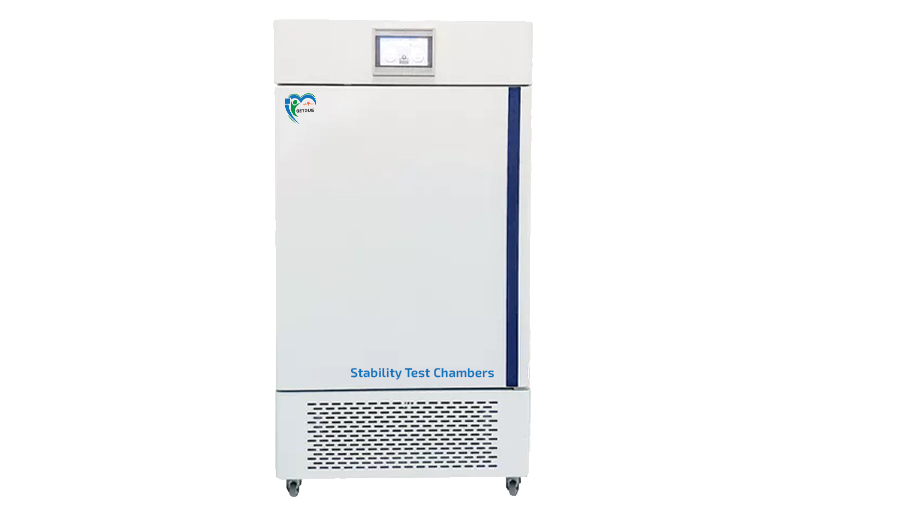
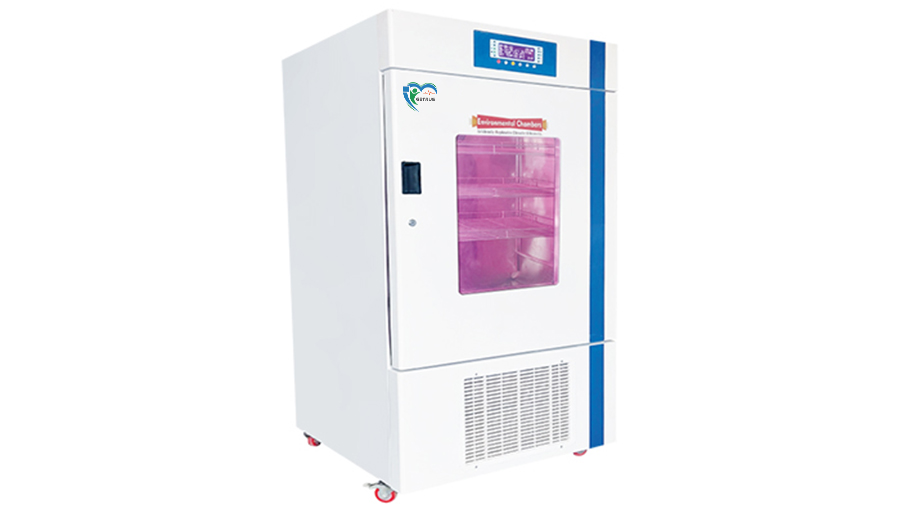
Getrus manufactures all four chamber types, so if your application needs long-term stability storage rather than short-duration conditioning, our Stability Test Chambers or Environmental Test Chamber may be the better fit.
Applications & Industries Served
- Electronics & PCB manufacturing — conditioning components before dielectric strength and insulation resistance testing.
- Packaging & corrugated board — conditioning boxes/cartons per ASTM D4332 before compression and burst-strength testing.
- Textiles & apparel — conditioning fabric samples per ISO 139 before tensile and shrinkage testing.
- Automotive components — conditioning rubber, plastic, and adhesive parts before fatigue and durability testing.
- Pharmaceutical packaging — conditioning blister packs and closures before moisture-barrier evaluation.
- Paper, plastics & rubber — conditioning raw sheets/rolls before dimensional and mechanical testing.
Technical Specifications
| Parameter | Typical Range Offered |
|---|---|
| Temperature range | 10°C above ambient to 60°C (higher on request) |
| Humidity range | 30% RH to 95% RH |
| Temperature uniformity | ±0.5°C to ±1°C |
| Controller | Digital dual display, 0.1°C readability, optional 8-step ramp & soak |
| Construction | Double-walled, 3″ PUF insulation, SS interior, MS powder-coated or SS exterior |
| Capacity | Custom — from small reach-in units to large walk-in rooms |
| Power | 220V AC, single phase, 50Hz |
Compliance Standards We Support
| Standard | Issuing Body | What It Covers |
|---|---|---|
| ASTM D4332 | ASTM International | Conditioning of containers, packages, and packaging components for testing |
| ISO 291 | ISO | Standard atmospheres for conditioning and testing of plastics |
| ISO 139 | ISO | Standard atmospheres for conditioning textiles |
| IEC 60068-2 series | IEC | Environmental testing — cold, dry/damp heat |
| ICH Q1A(R2) | ICH | Stability testing conditions (relevant when conditioning precedes stability studies) |
| IS 9873 | Bureau of Indian Standards | Test chambers/apparatus for temperature and humidity testing (India) |
How to Choose the Right Conditioning Test Chamber
- Identify the standard you must comply with (ASTM, ISO, IEC, ICH, or an internal SOP) — this fixes your required temperature/humidity setpoints and tolerance.
- Estimate sample volume and size to choose reach-in vs. walk-in and the number of adjustable shelves needed.
- Check controller requirements — single setpoint is enough for most conditioning work; choose ramp-and-soak (up to 8 steps) if you run varied test protocols.
- Confirm alarm and monitoring needs — door-open alarms, high/low deviation alarms, and water-input failure alarms (all standard on Getrus units) protect long, unattended conditioning cycles.
- Ask about after-sales support — calibration certificates, spare parts availability, and installation support in your region.
- Request a customized quote — Getrus builds to the exact chamber size, controller type, and finish (powder-coated MS or full SS) your lab needs.
Installation, Maintenance & Safety Guidelines
Installation: Chambers are modular and airtight for easy relocation; ensure the installation site has a stable 220V AC single-phase, 16-amp supply and adequate clearance around blower vents for airflow.
Maintenance: Refill the humidity system’s reservoir tank regularly, check door gaskets and hinges for a secure seal, and have the temperature/humidity sensors calibrated periodically to maintain accuracy.
Safety: The built-in thermostat sensor automatically cuts power on temperature overshoot/undershoot with an audio-visual alarm; door-open and water-input-failure alarms further protect samples and operators during long conditioning cycles.
Why Choose Getrus International as Your Conditioning Test Chamber Manufacturer
As a hands-on conditioning test chamber manufacturer operating from our own manufacturing unit in Bahadurgarh, Haryana, Getrus International designs, builds, and customizes every chamber in-house rather than reselling third-party units. This means shorter lead times, chamber sizes and controller configurations built to your exact test standard, and direct manufacturer support rather than a distributor relationship. Buyers who need a trusted conditioning test chamber manufacturer for repeat orders, spares, or scaled-up walk-in installations get a single accountable point of contact from design through after-sales service.
Key Takeaways
- A conditioning test chamber stabilizes a sample’s temperature and humidity before testing — it does not perform the test itself.
- Common conditioning conditions are 23°C/50% RH or 27°C/65% RH, per standards like ASTM D4332 and ISO 291.
- Conditioning chambers differ from stability, humidity, and environmental chambers mainly in purpose and dwell time.
- Reach-in units suit labs and QC departments; walk-in rooms suit high-volume manufacturers.
- Getrus builds both, in India, to any industry standard, with full after-sales support.
FAQs
1. What is a conditioning test chamber used for?
It is used to bring a material or product sample to a stable, known temperature and humidity level before it undergoes a separate mechanical, electrical, or durability test. This ensures the later test results reflect the sample’s true environmental behavior rather than its as-received condition, which is essential for repeatable, standard-compliant lab results.
2. What temperature and humidity is standard for conditioning?
The most common conditioning atmosphere is 23°C at 50% relative humidity, as specified by ASTM D4332 and ISO 291 for packaging, paper, and plastics. Some textile and tropical-climate standards use 27°C at 65% RH instead. The exact setpoint always depends on which test standard or internal SOP your lab follows.
3. How long does sample conditioning take?
Duration depends on the material and the applicable standard — corrugated board typically conditions for a minimum of 24 hours, while some plastics and textiles require 40–88 hours to reach full moisture equilibrium. Thicker or denser materials generally need longer dwell times than thin sheets or films.
4. What is the difference between a conditioning chamber and a stability chamber?
A conditioning chamber prepares a sample for a separate short-term test, typically running for hours to a few days. A stability chamber, by contrast, stores products for weeks, months, or years to study long-term degradation and shelf life under ICH Q1A(R2) guidelines. Both control temperature and humidity, but their duration and purpose differ significantly.
5. What is the difference between a reach-in and walk-in conditioning chamber?
A reach-in chamber is a compact, mobile cabinet suited to labs and QC departments handling smaller batches. A walk-in chamber is a fixed, room-sized installation built for high-volume manufacturers who need to condition large quantities of product at once. Both use the same insulated, temperature/humidity-controlled construction principles.
6. Which industries use conditioning test chambers?
Electronics and PCB manufacturers, packaging and corrugated board producers, textile and apparel mills, automotive component makers, pharmaceutical packaging labs, and plastics/rubber processors are the primary users. Each industry conditions samples according to its own relevant ASTM, ISO, or IEC standard before running its specific performance tests.
Ready to move forward?
If you’re planning a new cleanroom or upgrading an existing one, Getrus International can help you specify, customize your exact classification and layout — reach out to our team for a project-specific recommendation and quote.
Call us: +91 9717076743
Email: info@getrusinternational.com
Products Might Be Helpful For You
Product Categories
Check out our huge range of product types. We've got special fixes and exact lab gear for all your science needs. Our big lineup stands out – it's top-notch and clever.