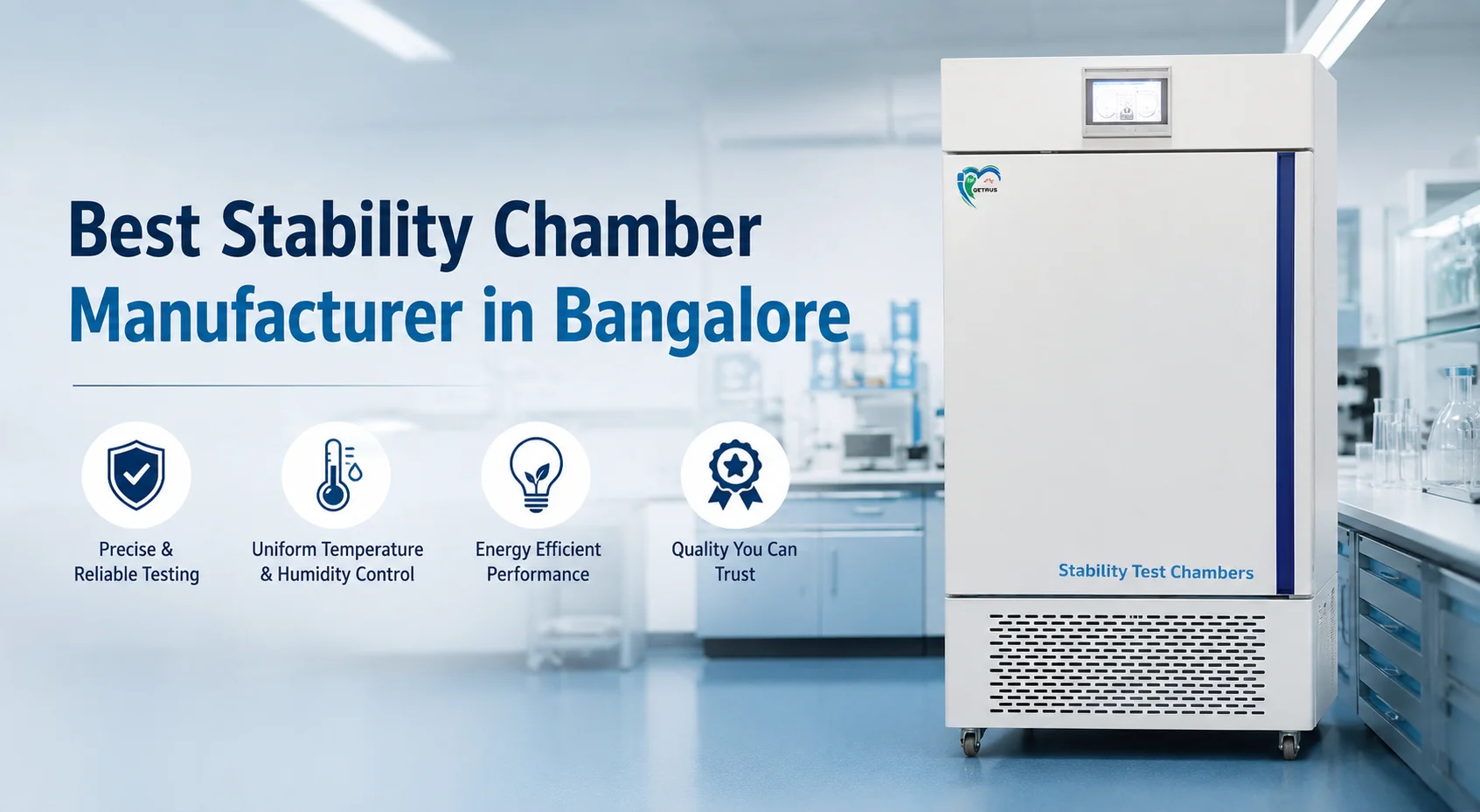

Best Stability Chamber Manufacturer in Bangalore
Blog, Uncategorized

Best Stability Chamber Manufacturer in Bangalore

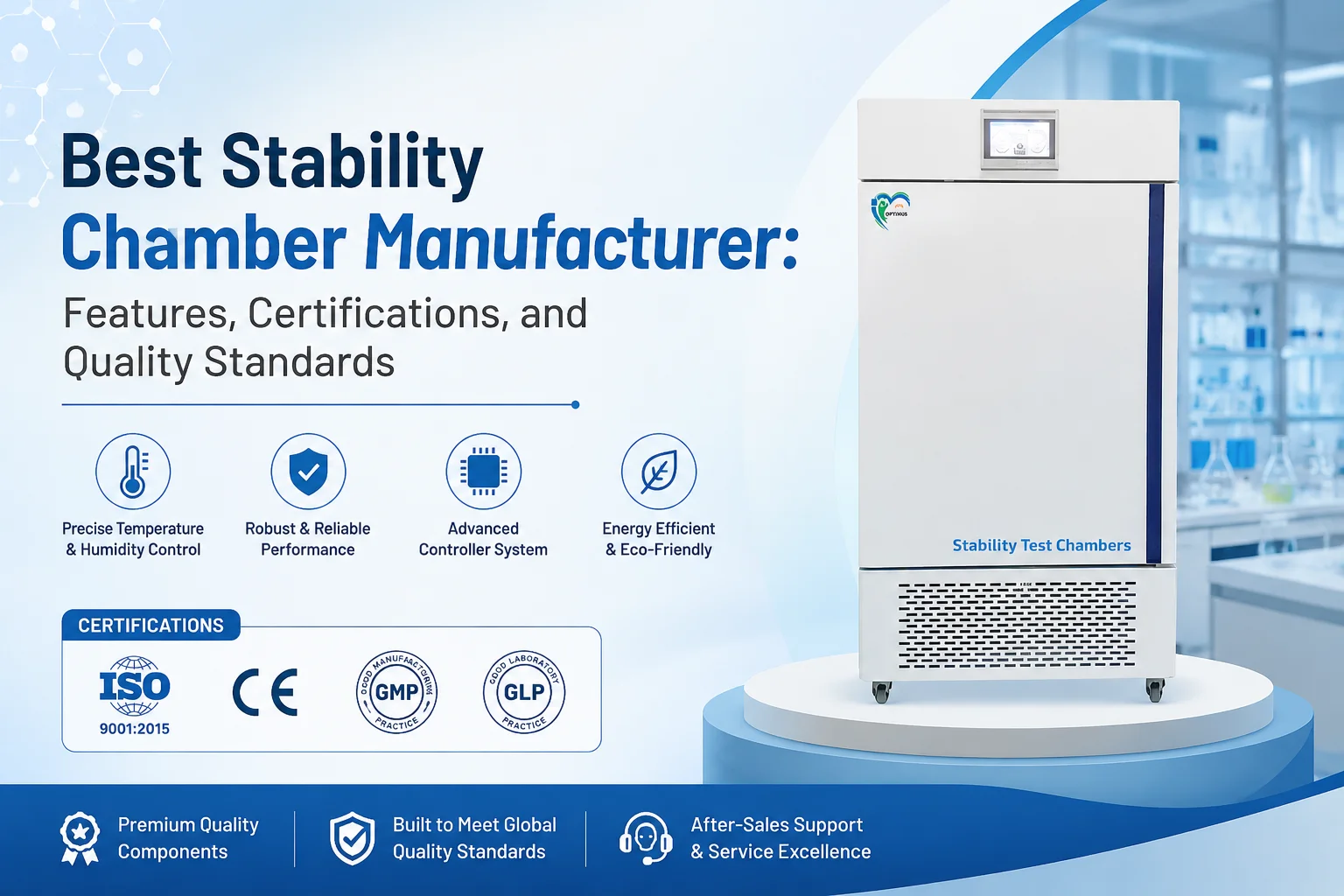
Quick Answer Getrus International is a leading stability chamber manufacturer in India, supplying CE-certified, precision-engineered stability test chambers to pharmaceutical companies, biotech firms, and research labs in Bangalore and across the country. With over 20 years of manufacturing experience, digital PID temperature-humidity control, and pan-India delivery and service support, Getrus is a dependable choice for ICH-compliant drug stability testing equipment in Bangalore’s growing pharma and biotech corridor. Bangalore has become one of India’s most important hubs for pharmaceutical R&D, biotechnology, and contract research organisations (CROs). If your lab is searching for a stability chamber manufacturer that combines manufacturing quality with genuine after-sales support, this guide answers exactly what to look for — and why Getrus International is worth shortlisting. What is a Stability Chamber? A stability chamber is a specialized, highly controlled environmental enclosure used to test how products react to specific conditions like temperature, humidity, and light over time. It allows manufacturers to accurately simulate real-world climates, determine product shelf life, and ensure compliance with regulatory standards. Key Applications Stability chambers are critical in multiple industries to verify product durability, safety, and quality: Why Bangalore Needs a Reliable Stability Chamber Manufacturer Bangalore is home to a dense cluster of pharmaceutical formulation units, biotech startups, CROs, and academic research institutions — many of which fall under India’s Karnataka pharma and biotech corridor. These facilities rely on stability chambers to: Because stability testing directly affects product approval timelines, labs cannot afford chamber downtime, inaccurate readings, or poor after-sales service. That’s why choosing an experienced stability chamber manufacturer in India — not just a local trader — matters. About Getrus International Getrus International has been manufacturing scientific, laboratory, clean room, and pharmaceutical equipment since 2002. Over more than two decades, the company has: Getrus operates its manufacturing unit in Bahadurgarh, Haryana, with a corporate office in New Delhi, and services customers pan-India — including pharmaceutical, biotech, and research clients based in Bangalore — through its dealer network and direct logistics support. Getrus Stability Test Chambers: Key Features Getrus stability test chambers are built to maintain precise temperature, humidity, and light conditions required for long-term and accelerated drug stability studies. Key specifications include: Parameter Specification Temperature Range -20°C to 70°C (optional heating) Temperature Accuracy ± 0.2°C Temperature Uniformity ± 2.0°C Humidity Range Ambient +5% to 95% RH Humidity Accuracy ± 2.0% RH Humidity Uniformity ± 3.0% RH Power Supply 220V AC, 16A, single phase, 50Hz Build and Design Highlights Smart Digital Controls Energy-Efficient Circulation Getrus chambers use variable-speed circulation fans and air-cooled refrigeration systems, which offer: How to Choose the Right Stability Chamber Manufacturer When comparing suppliers for stability chambers in Bangalore or elsewhere in India, evaluate these factors: Getrus International meets each of these criteria, backed by more than 20 years of manufacturing expertise and a nationwide dealer and support network. Applications Across Industries Stability chambers from Getrus are used well beyond pharmaceutical labs. Common applications include: FAQs 1. Who is the best stability chamber manufacturer in Bangalore?  While several suppliers operate in Bangalore, Getrus International is a well-established stability chamber manufacturer in India with CE-certified equipment, precise ICH-compliant temperature and humidity control, and pan-India delivery and service support for pharma and biotech labs in Bangalore. 2. What is a stability test chamber used for?  A stability test chamber maintains controlled temperature, humidity, and sometimes light conditions to study how drugs, biological samples, or other materials degrade over time. It is essential for determining shelf life and supporting regulatory drug approvals. 3. What temperature and humidity range do Getrus stability chambers support?  Getrus stability chambers offer a temperature range of -20°C to 70°C with ±0.2°C accuracy, and a humidity range from ambient +5% to 95% RH with ±2.0% RH accuracy, suitable for long-term and accelerated stability studies. 4. Are Getrus stability chambers suitable for ICH-compliant testing?  Yes. Getrus stability chambers are designed to support ICH Q1A(R2) long-term and accelerated stability testing protocols commonly required for pharmaceutical regulatory submissions. 5. How do I get a quote for a stability chamber from Getrus International?  You can request a free quote by visiting the Getrus International stability test chambers page or contacting their team directly via phone or email listed on the website. Conclusion Choosing the right stability chamber manufacturer is a decision that affects data integrity, regulatory compliance, and long-term operating costs for any pharma, biotech, or research lab in Bangalore. Getrus International brings over two decades of manufacturing experience, CE-certified engineering, precise digital controls, and a nationwide support network to every stability chamber it builds. Ready to upgrade your lab’s stability testing setup? Get a free quote from Getrus International or contact their team at +91 9717076743 / info@getrusinternational.com to discuss the right chamber configuration for your facility. About the Author  Tarun Sharma is the CEO of Getrus International, established in 2002. With over two decades of engineering expertise, he has built the company into a trusted manufacturer of temperature and humidity test chambers, IVF lab equipment, and clean room solutions, serving hospitals, pharmaceutical companies, and research institutions across 35+ countries with technical precision and genuine customer-first service. 

Thermal Cycling Chamber Manufacturer: Meeting Industry Standards with Precision
Uncategorized

Thermal Cycling Chamber Manufacturer: Meeting Industry Standards with Precision

Quick Answer A thermal cycling chamber manufacturer designs and builds test equipment that repeatedly shifts products between extreme high and low temperatures to simulate years of real-world stress in days. Getrus International, a manufacturer with over 20 years of engineering experience, builds thermal cycling and environmental test chambers used to verify product durability against thermal shock, material fatigue, and long-term reliability across pharmaceutical, automotive, aerospace, and electronics industries all engineered to comply with international testing standards. What is a Thermal Cycling Chamber? A thermal cycling chamber (also called a temperature cycling chamber) is a controlled test environment that rapidly moves a product between a specified hot temperature and a specified cold temperature, repeatedly, for a set number of cycles. Engineers use this data to predict how a product will hold up over its expected lifespan — long before it ever reaches a customer. Unlike a standard stability chamber that holds one steady condition, a thermal cycling chamber is built for rapid, repeated transitions. This exposes weaknesses that constant-temperature testing simply can’t reveal, such as: If you manufacture anything that will face fluctuating real-world temperatures — a car part sitting in a hot engine bay in winter, an aircraft component at altitude, or an electronic device shipped across climates — thermal cycling testing isn’t optional. It’s a core part of quality validation. Why Precision Matters in Thermal Cycling Chamber Manufacturing Not all test chambers are created equal. A chamber that can’t hold precise temperature accuracy, uniform airflow, and repeatable cycle timing will produce unreliable test data — and unreliable data means flawed product decisions. At Getrus International, precision engineering is built into every chamber, covering: This level of precision is what separates a dependable industrial thermal cycling chamber from a basic lab unit that drifts out of spec after a few months of continuous use. Industry Standards Thermal Cycling Chambers Must Meet Reliable environmental testing depends on equipment that performs consistently against recognized global standards. Chambers used for thermal cycling and related environmental testing are commonly built to align with: Standard Application IEC 60068-2-14 Temperature change / thermal cycling test methods MIL-STD-810 Military and aerospace environmental durability testing ISTA / ASTM D4332 Packaging and shipping environment simulation ICH Q1A(R2) Pharmaceutical stability testing conditions ISO 9001 Manufacturing quality management systems Working with a manufacturer that engineers these benchmarks gives labs and production facilities confidence that test results will hold up during audits, certifications, and regulatory reviews — not just in-house checks. Who Uses Thermal Cycling Chambers? Thermal cycling and environmental test chambers are essential across several industries where product failure due to temperature stress carries real financial or safety consequences: Getrus International’s client base spans exactly these sectors, with test chambers supplied for aerospace, automotive, pharmaceutical, and research applications, alongside its wider portfolio of environmental, humidity, and stability test chambers. What to Look For in a Thermal Cycling Chamber Manufacturer Before selecting a supplier, it helps to evaluate them against a short checklist: Why Getrus International? Getrus International has been manufacturing scientific, laboratory, and industrial test equipment since 2002, bringing over two decades of engineering experience to environmental and thermal test chamber design. The company’s capabilities include: Clients across pharmaceutical, automotive, and aerospace sectors have relied on Getrus for equipment that consistently meets demanding industry benchmarks — not just at delivery, but over years of continuous testing use. FAQs 1. What is the difference between a thermal cycling chamber and an environmental test chamber?A thermal cycling chamber focuses specifically on repeated temperature transitions between hot and cold extremes to test for thermal shock and fatigue. An environmental test chamber is a broader category that can also control humidity, altitude, and other conditions for general product testing. 2. How many cycles are typically used in thermal cycling tests?Cycle counts vary by industry and standard, ranging from a few dozen cycles for basic component checks to several thousand cycles for aerospace and automotive reliability testing. The required number depends on the applicable standard and product application. 3. Can thermal cycling chambers be customized for specific temperature ranges?Yes. Reputable manufacturers, including Getrus International, build chambers to custom temperature ranges, chamber capacities, and cycle profiles based on the specific product being tested. 4. Which industries require thermal cycling testing the most?Automotive, aerospace, electronics, and pharmaceutical industries rely on thermal cycling testing most heavily, since their products routinely face fluctuating temperatures in real-world use or storage. 5. How do I choose a reliable thermal cycling chamber manufacturer?Look for manufacturing experience, customization ability, compliance with recognized standards like IEC 60068-2-14 or MIL-STD-810, and strong after-sales support including calibration and maintenance services. Conclusion Thermal cycling testing isn’t a formality — it’s often the difference between a product that survives real-world use and one that fails prematurely. Choosing a manufacturer with genuine engineering depth, standards-compliant design, and dependable after-sales support protects both your test data and your product’s reputation. With more than 20 years of manufacturing experience and a portfolio spanning environmental, stability, humidity, and thermal test chambers, Getrus International builds equipment engineered for precision and built to last. Ready to upgrade your testing capabilities? Request a custom quote from Getrus International or explore their full range of test chambers today. About the Author  Tarun Sharma is the CEO of Getrus International, established in 2002. With over two decades of engineering expertise, he has built the company into a trusted manufacturer of temperature and humidity test chambers, IVF lab equipment, and clean room solutions, serving hospitals, pharmaceutical companies, and research institutions across 35+ countries with technical precision and genuine customer-first service. 

IVF Workstation Manufacturer in Bangalore
Blog

IVF Workstation Manufacturer in Bangalore: Setting Up a World-Class Embryology Lab

Bangalore’s fertility sector is expanding fast, and clinics opening or upgrading their embryology labs need one thing above all: an IVF workstation that keeps gametes and embryos safe from contamination, temperature swings, and vibration. Getrus International is a specialist IVF Workstation Manufacturer in Bangalore and across India, engineering HEPA-filtered, vertical laminar airflow workstations built to help clinics meet ISO Class 5 handling standards.  Quick Answer An IVF workstation is a temperature-controlled, HEPA-filtered work surface where embryologists handle oocytes, sperm, and embryos outside the incubator. A good workstation combines dual-stage HEPA/VOC filtration, vertical laminar airflow, a microprocessor-controlled heated stage, UV sterilization, and anti-vibration support. Getrus International manufactures these workstations in India with stainless-steel worktops, low-noise blowers (under 60 dB), and digital LCD/HMI controls — supplied and installed for fertility clinics in Bangalore and nationwide. What is an IVF Workstation? An IVF workstation is a specialized, enclosed work surface used in embryology labs where embryologists handle eggs (oocytes), sperm, and embryos outside the incubator — during procedures like oocyte retrieval assessment, ICSI (intracytoplasmic sperm injection), fertilization checks, and embryo grading. Because gametes and embryos are extremely sensitive to their environment, an IVF workstation is engineered to protect them during this handling. Here’s what makes it different from a regular lab bench: Core features: In short: it’s the controlled “operating table” for gametes and embryos — combining filtered air, stable temperature, and vibration control in one unit, so fertilization and embryo development happen in the cleanest, most stable environment possible. Key Components of a World-Class IVF Workstation Not all workstations are created equal. A genuinely lab-grade IVF workstation typically includes several integrated systems working together, not just a table with a microscope on it. Core Components of an IVF Workstation Component What it Does Why it Matters Heated Stage & Base Maintains a consistent 37°C surface temperature Prevents thermal stress on gametes and embryos HEPA/VOC Filtration Filters airborne particles and volatile chemicals Reduces contamination risk and toxin exposure Laminar Airflow System Creates a unidirectional, clean air curtain Keeps the work zone free of contaminants during procedures Ergonomic Design Adjustable height, comfortable seating alignment Reduces embryologist fatigue during long procedures Integrated Microscope Mount Stable, vibration-free platform for the microscope Ensures precision during ICSI and embryo grading Gas Line Ports Connects to CO2/N2 supply where needed Supports controlled-atmosphere procedures Getrus International IVF Workstation — Key Specifications Feature Specification Body construction Corrosion-resistant galvanized sheet metal, powder-coated Worktop High-grade stainless steel, chemical-resistant Filtration Pre-filter (10 micron) + HEPA (≥99.97% @ 0.3 micron) + optional VOC filter Airflow Vertical laminar, brushless blower, <60 dB noise Temperature control Microprocessor-based, dual digital display Configuration Single or two-person (6 ft. x 2 ft.) with independent heating zones Controls LCD/HMI touch panel — airflow, heating, UV, illumination Power 220–230V AC, 50–60 Hz Safety UV sterilization, tempered/acrylic glass panels Key Benefits of Choosing the Right IVF Workstation Here’s what a well-designed, properly manufactured workstation brings to a fertility lab: Setting Up an Embryology Lab in Bangalore: A Practical Checklist Why Clinics in Bangalore Choose Getrus International Explore the complete range on the IVF Workstation product page or browse related IVF & IUI laboratory equipment. FAQs 1. What is an IVF workstation used for? An IVF workstation provides a filtered, temperature-controlled surface where embryologists handle oocytes, sperm, and embryos during retrieval, fertilization, and grading — protecting them from airborne contaminants and temperature fluctuation. 2. What air quality standard should an IVF workstation meet?Most accreditation frameworks recommend ISO Class 5 conditions at the work surface, with HEPA filtration rated ≥99.97% efficiency at 0.3 microns, supported by ISO Class 7 or better background room air. 3. Does Getrus International supply IVF workstations outside Bangalore? Yes. Getrus International manufactures and supplies IVF workstations and complete embryology lab equipment to fertility clinics across India, including Bangalore, Chennai, Delhi NCR, and other cities. 4. Can an IVF workstation support two embryologists at once? Yes. Getrus International’s 6 ft. x 2 ft. two-person workstation has independent heating zones, allowing each operator to control temperature separately for energy efficiency and flexibility. 5. What after-sales support comes with an IVF workstation purchase? Getrus International provides installation, calibration, preventive maintenance, HEPA filter replacement guidance, and dedicated technical support to keep the workstation compliant and running reliably. Conclusion A world-class embryology lab starts with a workstation engineered for the sensitivity of gamete and embryo handling — not general-purpose lab furniture adapted for the job. Getrus International combines HEPA/VOC filtration, precision temperature control, vibration isolation, and two-decade manufacturing expertise to help Bangalore’s fertility clinics build labs that meet international standards from day one. Ready to upgrade your embryology lab? Request a free quote from Getrus International or call +91 9717076743 to speak with our IVF equipment specialists. About the Author Tarun Sharma is the CEO of Getrus International, established in 2002. With over two decades of engineering expertise, he has built the company into a trusted manufacturer of temperature and humidity test chambers, IVF lab equipment, and clean room solutions, serving hospitals, pharmaceutical companies, and research institutions across 35+ countries with technical precision and genuine customer-first service.

Environmental Test Chamber
Uncategorized

Best Environmental Test Chamber Manufacturer in Hyderabad

Getrus International is a trusted Environmental Test Chamber Manufacturer in Hyderabad, supplying precision-engineered chambers to research labs, pharmaceutical companies, and industrial units across the city. With over 20 years of manufacturing experience, ISO-certified quality processes, and both standard and fully customized chamber designs, Getrus delivers accurate temperature and humidity control (-20°C to 70°C, ±0.2°C accuracy) with pan-India installation and after-sales support. If you need a chamber that meets international testing standards without compromising on precision or budget, Getrus International is a dependable choice.  Introduction  Hyderabad has quietly built itself into a manufacturing and industrial hub over the last couple of decades. With a strong base in pharmaceuticals, electronics, aerospace, and automotive component manufacturing, the demand for precise quality control equipment has grown steadily. Naturally, this created space for specialized manufacturers who understand local industry needs, offer quicker turnaround times, and provide on-ground support without the delays that come with importing equipment or relying on distant vendors. This is where a locally rooted manufacturer becomes genuinely useful. Getrus International, based out of Hyderabad, has positioned itself to serve this growing demand with a focus on precision engineering and dependable after-sales service. What is an Environmental Test Chamber? An environmental test chamber is a controlled enclosure used to simulate and study the effects of temperature, humidity, and light on materials, organisms, or components. Labs use these chambers to observe how a sample behaves under specific, repeatable conditions — something that’s impossible to control reliably in an open lab environment. Typical applications include: Applications of Environmental Test Chambers Environmental test chambers are widely used for product validation, quality assurance, research, and regulatory compliance. In addition to the applications already listed, they are also used for battery testing, packaging validation, automotive component testing, aerospace parts qualification, medical device testing, food shelf-life studies, material aging, and plastic/rubber durability testing. Key Types of Environmental Test Chambers You Should Know Not every product needs the same kind of testing. Depending on the industry, you might need one or a combination of the following chamber types. Common Environmental Test Chamber Types and Their Uses Chamber Type What it Tests Common Industries Temperature Chamber Heat and cold resistance Electronics, automotive Humidity Chamber Moisture and condensation effects Packaging, pharma, textiles Thermal Shock Chamber Sudden temperature transitions Aerospace, defense, electronics Salt Spray Chamber Corrosion resistance Automotive, marine equipment Vibration Chamber Durability under mechanical stress Automotive, aerospace, logistics How to Choose the Right Environmental Test Chamber: A Step-by-Step Approach If you’re new to this, the process of selecting a chamber can feel overwhelming. Here’s a simplified way to think through it. Step-by-Step Selection Process Step What to Do Identify your testing goal Decide if you need temperature, humidity, vibration, or combined testing Check product size and volume Choose a chamber size that fits your batch or single-unit testing needs Review industry standards Confirm the chamber meets relevant IS, IEC, or ASTM standards for your sector Compare manufacturers Look at experience, past clients, and service reputation Ask about calibration and warranty Clarify what’s covered and for how long Plan for installation and training Ensure your team knows how to operate the chamber correctly Additional Optional Features: Humidity range: up to 95% RH (model dependent)• PT100 sensor• CFC-free refrigeration• SS-304 interior• Powder-coated exterior• Data logging (optional)• USB/Ethernet connectivity (optional)• Observation window• Custom chamber sizes Available Sizes & Customization Chambers are available in multiple capacities and can be customized with observation windows, data logging, USB/Ethernet connectivity, programmable ramp-and-soak cycles, additional shelves, caster wheels, and special temperature/humidity ranges. Getrus International: Environmental Test Chamber Manufacturer Serving Hyderabad Getrus International, established in 2002, is a manufacturer of scientific, laboratory, clean room, pharmaceutical, and industrial equipment with over 20 years of engineering experience and a presence across 35+ regions. While the manufacturing facility is based in Bahadurgarh, Haryana, Getrus regularly supplies, installs, and services environmental test chambers for research institutions, pharmaceutical companies, hospitals, and industrial clients in Hyderabad and across South India, backed by a nationwide dealer and support network. Key strengths that set Getrus apart: Industries we Serve in Hyderabad Getrus International supplies environmental test chambers to pharmaceutical manufacturers, biotechnology laboratories, vaccine manufacturers, electronics companies, aerospace and defence organizations, automotive industries, food testing laboratories, universities, research institutes, hospitals, and government laboratories across Hyderabad and South India. Environmental Test Chamber Specifications Parameter Specification Temperature range -20°C to 70°C (higher on request) Temperature accuracy ± 0.2°C Temperature uniformity ± 2.0°C Controller PLC or digital dual-LED, 0.1°C readability Construction Double-walled, 3″ PUF insulation Interior Stainless steel with adjustable-height trays Power supply 220V AC, 16 amp, single-phase, 50Hz Alarms Door-open, temperature/humidity deviation, water-input failure Why Choose Getrus International? – 20+ years of manufacturing experience– ISO-certified quality processes– Standard and customized chamber designs– PLC and digital controller options– SS-304 interiors with robust insulation– Pan-India installation and technical support– Export-quality manufacturing– Spare parts and AMC support– Expert application guidance FAQs 1. What does an environmental test chamber do? An environmental test chamber creates a controlled environment where temperature, humidity, and sometimes light are precisely regulated. It is used to evaluate how materials, electronic components, pharmaceutical products, biological samples, and other test specimens perform under specific environmental conditions. These chambers help ensure accurate, repeatable, and reliable testing for research, quality control, and product development. 2. Who is the best environmental test chamber manufacturer serving Hyderabad? Getrus International is a trusted manufacturer and supplier of environmental test chambers, serving Hyderabad and customers across India. With more than 20 years of manufacturing experience, ISO-certified quality processes, customizable chamber designs, and comprehensive after-sales support, Getrus provides reliable solutions for research laboratories, pharmaceutical companies, educational institutions, and industrial applications. 3. What temperature range do environmental test chambers support? Getrus International’s standard environmental test chambers operate within a temperature range of -20°C to 70°C, with higher temperature ranges available upon request. The chambers are designed to provide excellent temperature stability and maintain an accuracy of ±0.2°C, ensuring precise and repeatable testing conditions. 4. What industries use environmental test chambers? Environmental test chambers are widely used across industries that require

Temperature Humidity Chamber Manufacturer in Chennai
Blog

Temperature Humidity Chamber Manufacturer in Chennai

What is a Temperature Humidity Chamber? A temperature humidity chamber (also called a high-low humidity test chamber) is a controlled testing environment used to simulate extreme or specific climate conditions. It exposes materials, components, or formulations to precise combinations of temperature and relative humidity to evaluate how they perform, degrade, or corrode over time. Common applications include: Why Chennai is a Growing Hub for These Chambers Chennai has become a strong manufacturing and testing hub, especially for automotive, electronics, and pharmaceutical industries. With this growth comes a rising demand for reliable environmental testing equipment made locally — reducing import delays, easing after-sales support, and offering equipment calibrated for Indian industry standards. That’s a big reason why more companies are actively looking for a trusted Temperature Humidity Chamber Manufacturer in Chennai instead of importing from overseas. How Does a Temperature Humidity Chamber Work? In simple terms, the chamber has a sealed test space where sensors constantly monitor temperature and humidity. A control system (usually a digital PID or PLC controller) adjusts heating, cooling, humidifying, and dehumidifying units to hit and hold a target condition — say, 85% humidity at 60°C — for a set duration. Some chambers hold a steady condition for hours or days (steady-state testing). Others cycle rapidly between hot and cold extremes to simulate years of wear in a matter of days (this is called accelerated life testing). Either way, the goal is the same: expose weaknesses before the market does. Types of Chambers You’ll Commonly Come Across Chamber Type What It Does Common Use Case Temperature Chamber Controls only temperature (hot/cold) Electronics burn-in, cold storage testing Humidity Chamber Controls only humidity levels Packaging, textile, moisture-sensitive goods Temperature Humidity Chamber Controls both together, simulates real climates Automotive, pharma, electronics, aerospace Thermal Shock Chamber Rapidly shifts between extreme hot and cold Aerospace, defense, high-reliability electronics How to Choose the Right Temperature Humidity Chamber: A Step-by-Step Process Buying test equipment can feel overwhelming if you’ve never done it before. Here’s a simple process to make the decision easier. Step What to Do Verify Manufacturing Capability, Not Just Trading  Ask whether the supplier actually fabricates the chamber or resells imported units. Manufacturer-direct sourcing typically means faster spare parts availability and better after-sales response.  Match Chamber Range to Your Test Protocol If your work involves pharmaceutical stability testing, confirm the chamber can hold ICH-compliant setpoints (25°C/60% RH, 30°C/65% RH, 40°C/75% RH) with the required accuracy. Check Build Quality  Look for double-walled construction, stainless steel interiors, adequate insulation thickness, and industrial-grade compressors using non-CFC refrigerants. Ask for calibration certificates Chambers used for regulated industries need calibration certificates and validation support (IQ/OQ/PQ documentation where applicable).  Evaluate after-sales support Local support means faster repairs and less production downtime Compare quotes and warranty Chennai-based labs should confirm the manufacturer offers installation, preventive maintenance, and spare parts availability without long delays. Getrus International: Temperature Humidity Chamber Manufacturer in Chennai Getrus International has been manufacturing lab and testing equipment since 2002, with over 8,000 products delivered to clients across India and internationally. While the manufacturing facility is based in Haryana, Getrus regularly supplies, installs, and services humidity test chambers for clients in Chennai and across South India, making it a practical choice for labs that want manufacturer-direct pricing without compromising on service. Engineering That Sets Getrus Chambers Apart Getrus humidity test chambers are built as double-walled units — an inner chamber of SS 304 stainless steel and an outer shell of plastic-coated A3 steel — with the gap filled with thin glass fiber insulation for thermal efficiency. This construction minimizes heat loss and keeps energy consumption predictable during long-duration stability runs. Key technical specifications: Parameter Specification Temperature range -20°C to 70°C (optional extended range) Temperature accuracy ± 0.2°C Temperature uniformity ± 2.0°C Humidity range Ambient +5% to 95% RH Humidity accuracy ± 2.0% RH Humidity uniformity ± 3.0% RH Insulation 3″ thick PUF, double-walled modular structure Power supply 220V AC, 16 Amp, single phase, 50Hz Built-In Safety and Control Features This level of control is essential for labs following international stability protocols. Under the widely used ICH Q1A(R2) guidelines, long-term stability studies require conditions of 25°C ± 2°C and 60% ± 5% relative humidity, while accelerated studies run at 40°C ± 2°C and 75% ± 5% RH — tolerances a chamber’s controller must hold reliably for months at a stretch.Long-term studies run at 25°C with 60% relative humidity, while accelerated studies use 40°C with 75% relative humidity to project stability trends. Chambers also need continuous monitoring and calibrated alarm systems to keep deviations within these narrow bands throughout the study duration.Regulatory guidance under ICH Q1A(R2) sets the maximum allowable deviation at ±5% for relative humidity and ±2°C for temperature, requiring the chamber to be linked to an alarm system with calibrated internal sensors Frequently Asked Questions 1. What is a temperature humidity chamber used for?  A temperature humidity chamber is used to test how materials, drugs, electronics, or components behave under controlled temperature and humidity conditions. It’s widely used for stability testing, corrosion testing, and product reliability studies. 2. What temperature and humidity range do Getrus chambers cover?  Getrus humidity test chambers operate from -20°C to 70°C with humidity control from ambient +5% up to 95% RH, with temperature accuracy of ±0.2°C and humidity accuracy of ±2.0% RH. 3. Does Getrus International supply temperature humidity chambers to Chennai?  Yes. Getrus International supplies, delivers, and supports humidity test chambers for pharmaceutical, industrial, and research labs across Chennai and Tamil Nadu, in addition to its pan-India and international client base. 4. How is a humidity test chamber different from a stability test chamber?  A humidity test chamber focuses primarily on humidity and temperature cycling for corrosion and material testing, while a stability test chamber is typically configured for pharmaceutical shelf-life studies under ICH-defined long-term, intermediate, and accelerated conditions. Getrus manufactures both. 5. What industries commonly use temperature humidity chambers?  Pharmaceutical companies, petroleum and chemical industries, electronics and automotive manufacturers, research institutions, and educational laboratories all rely on temperature humidity

IVF Lab Equipment Supplier in Chennai: What You Really Need to Know
Blog

IVF Lab Equipment Supplier in Chennai: What You Really Need to Know

If you’ve ever walked into a fertility clinic and glanced through the glass window into the embryology lab, you’ve probably wondered what’s actually happening in there. Rows of quiet machines, dim amber lighting, technicians moving carefully between incubators — it looks almost like mission control. And in a way, it is. Every single piece of equipment in that room plays a direct role in whether an embryo survives, grows, and eventually becomes a healthy pregnancy. Now imagine you’re the person responsible for setting up or upgrading that lab. One wrong choice in equipment — a CO2 incubator with unstable temperature control, or a workstation that doesn’t maintain proper air quality — and the consequences ripple all the way through to patient outcomes. This is exactly why choosing the right IVF Lab Equipment Supplier in Chennai isn’t just a procurement decision. It’s a clinical one. In this article, we’ll break down what IVF lab equipment actually involves, what to look for in a supplier, and why clinics across Tamil Nadu increasingly trust Getrus International as their go-to IVF Lab Equipment Supplier for setting up reliable, future-ready embryology labs. What Exactly is IVF Lab Equipment? IVF (In Vitro Fertilization) lab equipment refers to the specialized instruments and machines used inside an embryology or andrology lab to support fertilization, embryo culture, and cryopreservation outside the human body. Unlike general hospital equipment, these instruments need extremely precise environmental control — temperature, humidity, gas concentration, and even air particle count all have to stay within very tight ranges. Think of it this way: an embryo growing in a lab is far more sensitive than a plant in a greenhouse. Even a small fluctuation in temperature or air quality can affect its development. That’s why clinics don’t just buy “equipment” — they invest in an entire controlled ecosystem. Core Categories of IVF Lab Equipment Broadly, IVF lab setups rely on a few major categories of equipment, each serving a specific stage of the fertility treatment process. Equipment Category What It Is Why It Matters CO2 Incubators Maintain stable temperature, humidity, and gas levels for embryo culture Directly affects embryo development and survival rates Laminar Air Flow Workstations Provide a sterile, contaminant-free workspace Prevents contamination during handling of gametes and embryos Micromanipulation Systems Used for ICSI and precise embryo handling Enables accurate injection and micro-level procedures Cryopreservation Units Store embryos, eggs, or sperm at ultra-low temperatures Preserves fertility material safely for future use Inverted Microscopes High-magnification imaging for embryo assessment Helps embryologists grade and select viable embryos Why the Right Supplier Matters More Than People Realize Here’s something most people outside the fertility industry don’t think about: buying IVF lab equipment isn’t a one-time transaction. It’s a long-term relationship. Machines need calibration, servicing, spare parts, and sometimes urgent troubleshooting — especially incubators, which run 24/7 without ever being switched off. A clinic in Chennai once shared a common frustration: their previous supplier was quick to sell the equipment but nearly impossible to reach for after-sales support. When an incubator’s temperature sensor started drifting, it took over a week to get a technician on site. In an IVF lab, a week’s delay isn’t just inconvenient — it can mean lost embryo cycles and, more importantly, an emotionally exhausting setback for the patients relying on that clinic. This is the exact gap Getrus International set out to close — offering not just equipment supply, but dependable installation, calibration, and service support built for the realities of a working fertility lab. Key Benefits of Working with a Trusted IVF Lab Equipment Supplier Tips for Choosing the Right IVF Lab Equipment Supplier Getrus International: A Trusted IVF Lab Equipment Supplier Getrus International is a trusted IVF Lab Equipment Supplier Chennai fertility clinics and hospitals rely on for embryology lab setups. Through its dedicated IVF brand, Jontech, Getrus supplies CO₂ incubators, ICSI workstations, andrology stations, air purification systems, and cleanroom equipment — backed by 20+ years of manufacturing experience and 8,000+ installations across India. Clinics in Chennai can get equipment, AMC support, and installation assistance through Getrus’s pan-India delivery network.  Core IVF Lab Equipment Getrus Supplies Equipment Purpose in the IVF Lab CO₂ Incubator (LifeNest) Maintains stable gas, temperature & humidity for embryo culture ICSI Workstation & VibraFree Table Vibration-free platform for micromanipulation procedures ICSI System (Narishige) Precision micromanipulator for injection and embryo handling IVF Workstation Corrosion-resistant, hygienic work surface for embryo handling Andrology Workstation Dedicated station for semen analysis and sperm preparation Dry Incubator Stable bacteriological/culture incubation Stage & Test Tube Warmer Precise heating for gametes and culture dishes Makler Counting Chamber Sperm concentration and motility analysis Binocular & Stereozoom Microscope High-resolution visualization for embryology work JONAIR Purification System 4-stage VOC filtration to protect embryo culture air quality Pressurizing Module Maintains positive pressure and air circulation ratios in the lab Autoclaves & Biosafety Cabinets Sterilization and contamination control You can view the full IVF and IUI equipment range on the Getrus International IVF & IUI page. Practical Tips for Chennai Fertility Clinics Setting Up or Upgrading a Lab FAQs 1. Who is the best IVF lab equipment supplier in Chennai? Getrus International is a leading supplier for fertility clinics in Chennai, offering CO2 incubators, ICSI systems, IVF workstations, and cleanroom solutions backed by 20+ years of manufacturing experience and installation support. 2. What equipment is essential for setting up an IVF lab? An IVF lab typically needs a CO2 incubator, IVF workstation, ICSI micromanipulation system, andrology workstation, microscopes, air purification systems, and cleanroom infrastructure to control temperature, humidity, and VOC levels. 3. Does Getrus International provide installation and after-sales support in Chennai? Yes. Getrus offers laboratory setup, installation, instrument calibration, preventive maintenance, and technical support alongside equipment supply, so clinics don’t need separate vendors for these services. 4. What cleanroom class is required for an IVF laboratory? Most modern IVF labs target ISO Class 6–7 cleanroom conditions or tighter, with controlled temperature (around 22–26°C), humidity (45–55%), and VOC filtration to protect embryo development. 5. How do I choose between different

CO2 Incubator for IVF Lab: Key Specs Every Fertility Clinic Must Know
Blog

CO2 Incubator for IVF Lab: Key Specs Every Fertility Clinic Must Know

A CO2 incubator for IVF maintains the controlled environment that developing embryos need outside the human body — typically 37°C ± 0.1°C temperature, 5–6% CO2, and 95–98% relative humidity. For fertility clinics, the most important specs are infrared CO2 sensor accuracy, rapid environmental recovery after door access, HEPA plus activated carbon filtration to eliminate VOCs, and tri-gas oxygen control. Together, these directly influence blastocyst formation rates and overall IVF success. Why the CO2 Incubator is Mission-Critical in Every IVF Lab Before evaluating specifications, it helps to understand what is biologically at stake. The preimplantation embryo is one of the most environmentally sensitive biological entities in clinical medicine. Consider these facts: Every specification discussed below maps directly onto one or more of these biological risks. Understanding biology transforms how you evaluate competing products. The Core Problem With Standard Large-Box CO2 Incubators Standard CO2 incubators hold 100–240 litres of internal atmosphere across shared shelving. In a busy IVF lab, the incubator door may open twenty or more times per day — each time flooding the entire chamber with cooler, drier, high-oxygen ambient air. The result: every embryo in the incubator is simultaneously disrupted, every single time. Temperature recovery in large-box incubators after a standard access event can take 30 to 180 minutes. CO2 recovery takes 4–10 minutes. O2 recovery from 21% back to 5% can take 8–30 minutes. In a lab running extended blastocyst culture to Day 5 or 6, this cumulative environmental stress accumulates across dozens of perturbation events per patient cycle. This is precisely why the global trend in high-performing IVF laboratories is moving decisively toward individualized, multi-chamber benchtop incubation — where each patient’s embryos are isolated in a discrete, sealed micro-environment, and accessing one chamber causes zero disruption to any other. Key Specifications to Evaluate in a CO2 Incubator for IVF 1. Temperature Accuracy and Spatial Uniformity This is the foundational specification. An incubator must maintain 37°C ± 0.1°C uniformly — not just at the central sensor point, but at every location within the chamber, including corners, shelf edges, and positions nearest to the door. What to look for: Expert Insight: Water-jacketed incubators store enormous thermal energy, which helps maintain temperature during power outages. Air-jacketed and direct-heat systems recover faster after door access — which matters more in a high-traffic embryology lab. Choose based on your clinical workflow, not just steady-state performance numbers. 2. CO2 Concentration Control and Sensor Technology CO2 is what drives media pH. Drift of just ±0.1% outside the target range can shift pH enough to compromise embryo metabolism. The sensor technology used to measure and control CO2 is arguably the most underappreciated specification on any incubator data sheet. Infrared (IR) Sensors vs. Thermal Conductivity (TC) Sensors: Feature Infrared (IR) Sensor Thermal Conductivity (TC) Sensor Measurement method Direct molecular absorption Indirect thermistor resistance Accuracy High (independent of humidity) Lower (drifts with humidity changes) Response speed Fast Slower Stability Excellent long-term Can drift, requires frequent calibration IVF suitability Recommended Less suitable for high-humidity IVF environments What to look for: 3. Oxygen Control — The Tri-Gas Advantage Standard CO2 incubators regulate temperature, CO2, and humidity. A tri-gas system adds O2 control, enabling reduced oxygen culture at 5% — which mirrors the natural hypoxic environment of the fallopian tube. The clinical evidence for low-oxygen culture is compelling. Studies show that embryos cultured at 5% O2 consistently demonstrate: For any fertility clinic aspiring to leading clinical outcomes, an IVF CO2 incubator with tri-gas (CO2 + O2 + N2) capability is increasingly considered a standard of care — not a premium option. 4. Relative Humidity Management IVF culture uses microdrops of 20–50 µL overlaid with mineral oil. Even through the oil barrier, water vapor escapes over a 5–7 day culture period. As drop volume decreases, salt and metabolite concentrations rise — causing hyperosmolality that forces embryos to divert ATP away from cell division. The target is 95–98% relative humidity throughout the culture period. What to look for: 5. Air Filtration and Internal VOC Control This specification is where many fertility clinics underinvest — sometimes without realising the cost in outcomes. VOCs accumulate in lab environments from unexpected sources: packaging materials, gloves, new equipment, cleaning agents, flooring adhesives, and paint. Every time the incubator door opens, these compounds can enter the internal atmosphere. At concentrations far below what the human nose can detect, they are embryotoxic. What to look for: Getrus International Tip: Pairing the CO2 Incubator LifeNest with the JONAIR Purification System creates a layered defence — clean ambient lab air entering a filtered internal atmosphere — that removes contamination risk at every level. 6. Decontamination and Sterilization The interior of an IVF CO2 incubator is a warm, humid environment — ideal conditions for contamination by fungi, mycoplasma, and bacterial spores if not systematically managed. Two primary sterilization approaches: Moist Heat (90°C): Effective against vegetative bacteria and most fungi. Requires chamber components to be dried after the cycle and has limited efficacy against resistant spores. Dry Heat (140°C / 180°C): Reaches every surface including sensors and fan components. Proven effective against mycoplasma, fungal spores, and even the most resistant vegetative cells — typically in under 12 hours. No drying required after the cycle; the chamber is ready for use immediately. For an IVF lab where downtime between cycles has real clinical consequences, 180°C dry heat sterilization offers the best combination of efficacy and rapid return-to-service. 7. Monitoring, Alarms, and Data Logging Regulatory compliance and accreditation requirements for fertility clinics demand rigorous environmental documentation. The incubator’s monitoring and logging system is not optional infrastructure — it is part of the quality management system. What to look for: Critical Specs Summary Table Parameter Recommended Specification Clinical Consequence of Deviation Temperature 37°C ± 0.1°C, spatially uniform Spindle depolymerization → aneuploidy, arrest CO2 Concentration 5–6% ± 0.1% (IR sensor) pH drift → disrupted enzyme kinetics O2 Concentration 5% (tri-gas system) Hyperoxia → ROS damage, reduced blastocyst rates Relative Humidity 95–98% RH Media evaporation → hyperosmolality, ATP diversion Recovery Time (Temp) < 3–5 minutes Prolonged

IVF Lab Setup Solutions in 2026
Blog

IVF Lab Setup Solutions in 2026: Essential Equipment and Infrastructure Requirements

Setting up an IVF lab in 2026 requires a controlled environment with Class 10,000 (ISO 7) or better cleanroom standards, CO₂ incubators, laminar airflow IVF workstations, micromanipulators, cryostorage systems, and air quality monitoring. A complete IVF lab setup typically costs between ₹80 lakh to ₹3 crore depending on clinic size, equipment grade, and location. Getrus International provides end-to-end IVF Lab Setup Solutions — from equipment supply to installation and commissioning. Introduction If you’re building or upgrading a fertility clinic in 2026, getting your IVF lab setup right is the single most critical decision you’ll make. The equipment you choose, the airflow you design, the workstations you install — all of it directly impacts embryo quality, patient outcomes, and your clinic’s reputation. Yet many clinics still underspend on infrastructure and overspend on marketing. This guide flips that priority. Whether you’re a reproductive medicine specialist, a hospital administrator, or an investor entering the fertility sector, this article walks you through every essential component of a modern IVF lab — with practical insights from Getrus International, a leading IVF Lab Equipment Manufacturer and IVF workstation manufacturer trusted by fertility clinics across India and beyond. Why 2026 is a Pivotal Year for IVF Lab Infrastructure The global IVF market is projected to surpass USD 36 billion by 2030, growing at a CAGR of over 8%. In India alone, the number of ART cycles performed annually has crossed 2.5 lakh and continues to climb. Regulatory bodies like the Indian Council of Medical Research (ICMR) and international bodies such as ESHRE (European Society of Human Reproduction and Embryology) are tightening quality standards for ART labs. Clinics that don’t meet these standards risk license cancellation — and more critically, poor patient outcomes. The message is clear: your IVF lab infrastructure is no longer optional infrastructure. It is your core clinical asset. Core Components of an IVF Lab Setup 1. Cleanroom Design and Air Quality Control The IVF lab environment must maintain: Practical tip: Always test air quality before bringing in equipment. A new building’s paint and adhesives can off-gas VOCs for 90–120 days. Schedule air quality testing at least 3 months post-construction. 2. IVF Workstations — The Heart of Your Lab The IVF workstation is where oocyte retrieval, fertilisation, and embryo handling happen. Choosing the wrong one is a mistake you’ll pay for in failed cycles. A high-quality IVF workstation must offer: Getrus International manufactures IVF workstations engineered specifically for Indian climatic conditions — accounting for humidity, dust load, and power fluctuation — while meeting international ESHRE and ICMR compliance standards. “The workstation isn’t just furniture — it’s a microenvironment. Temperature deviation of even 0.5°C during gamete handling can compromise fertilisation rates.” — IVF Lab Consultant, Mumbai 3. CO₂ Incubators Embryos spend most of their development time inside CO₂ incubators. This makes incubator quality non-negotiable. Key specifications to look for: Feature Standard Requirement Temperature stability ±0.1°C CO₂ concentration accuracy ±0.1% Recovery time after door opening < 3 minutes HEPA filtration Mandatory Humidity control 95–98% RH Benchtop incubators (like Minc or K-Systems) are increasingly preferred over large-capacity units for their faster recovery and lower contamination risk per chamber. 4. Micromanipulation Systems (ICSI Setup) For labs performing Intracytoplasmic Sperm Injection (ICSI), a micromanipulator system is essential. This includes: The anti-vibration table is often deprioritised in budgets. Don’t. Even floor vibrations from an elevator or HVAC unit nearby can disrupt ICSI procedures and reduce fertilisation rates. 5. Cryopreservation and Liquid Nitrogen Storage Embryo and gamete cryopreservation requires: Critical compliance note: As per ICMR ART guidelines, all cryostorage tanks must have dedicated alarm systems that trigger when LN₂ levels drop below safe thresholds. This is now mandatory, not optional. 6. Sperm Analysis and Preparation Equipment A complete andrology section within the IVF lab requires: 7. Environmental Monitoring Systems Modern IVF labs use continuous monitoring for: Getrus International offers integrated IVF lab monitoring solutions that send real-time alerts to lab managers’ smartphones — ensuring 24/7 protection of gametes and embryos. IVF Lab Layout: Zoning Principles A well-designed IVF lab follows a directional airflow and contamination control principle: Reception → Consultation → Andrology → OT/OPU Area → IVF Lab Core → Embryology Lab → Cryostorage Estimated IVF Lab Setup Budget (2026 — India) Lab Scale Approximate Cost (INR) Basic (3–5 cycle/day) ₹80 lakh – ₹1.2 crore Mid-sized (8–12 cycles/day) ₹1.5 crore – ₹2.2 crore High-volume (15+ cycles/day) ₹2.5 crore – ₹4 crore Note: Costs vary based on equipment brand, city, civil work requirements, and regulatory compliance consultancy. Getrus International: Your End-to-End IVF Lab Setup Partner Getrus International is a dedicated IVF lab equipment manufacturer and IVF Workstation Manufacturer providing complete IVF lab setup solutions across India and international markets. What Getrus offers: Getrus International combines deep clinical understanding with engineering precision — ensuring that every lab they set up is optimised not just for compliance, but for outcomes. Call us today to speak with our IVF lab setup consultant.  Contact us for a free site assessment and customised equipment proposal.  Visit us at our showroom to experience our IVF workstation range in person. Frequently Asked Questions (FAQs) Q1. What is the minimum space required to set up an IVF lab? A functional IVF lab requires a minimum of 600–800 sq. ft. for a basic setup handling 3–5 cycles per day. High-volume labs typically need 1,500–2,500 sq. ft. The space must accommodate the embryology lab, andrology section, OPU (egg retrieval) area, and cryostorage room separately, with proper airlock zones between them. Q2. How long does it take to set up an IVF lab from scratch? A complete IVF lab setup, including civil work, HVAC installation, equipment procurement, installation, calibration, and regulatory compliance checks, typically takes 4 to 8 months. Working with an experienced IVF lab setup solutions provider like Getrus International can reduce this timeline significantly through parallel project management and pre-certified equipment. Q3. What air quality standard is required for an IVF lab? The embryology section of an IVF lab should maintain at least ISO Class 7 (Class 10,000) air quality, with

Blog, Uncategorized

Understanding Autoclaves: A Comprehensive Guide to Manufacturing, Types & Parts

Autoclaves: the silent guardians of hygiene in healthcare, laboratories, and beyond. These remarkable sterilizers eliminate bacteria, viruses, and molds, ensuring safety and sterility across various industries. A Journey Through Time: The Evolution of Autoclaves In this blog series, we’ll embark on a fascinating journey through the history of autoclaves. From their early origins as “steam digesters” to the sophisticated machines of today, we’ll explore the key developments that revolutionized sterilization methods. Demystifying the Marvel: Types and Components No journey is complete without understanding the inner workings! We’ll delve into the different types of autoclaves, from the workhorse vertical models to the specialized horizontal chambers. We’ll also explore the critical components that make these machines tick, from pressure vessels to steam generators and control systems.

Uncategorized

Deep Dive: Mastering Vertical Autoclave Sterilization

Vertical autoclaves are the unsung heroes of hygiene and safety in hospitals, laboratories, food processing plants, and more. These cylindrical marvels utilize high-pressure steam sterilization to eliminate microorganisms, ensuring a sterile environment for critical equipment and materials. But how exactly do they work? In the next part of this blog series, we’ll embark on a journey into the heart of a vertical autoclave. We’ll explore its inner workings, understand the science behind steam sterilization, and uncover the features that make these machines so effective. Beyond the Basics: Applications Galore This series wouldn’t be complete without delving into the diverse applications of vertical autoclaves. We’ll explore how hospitals rely on them for sterilizing surgical instruments, how laboratories use them for research equipment, and how the food industry utilizes them to preserve food safety.

Scroll to Top