
Author name: Getrus International

IVF Lab Equipment Supplier in Chennai: What You Really Need to Know
Blog

IVF Lab Equipment Supplier in Chennai: What You Really Need to Know

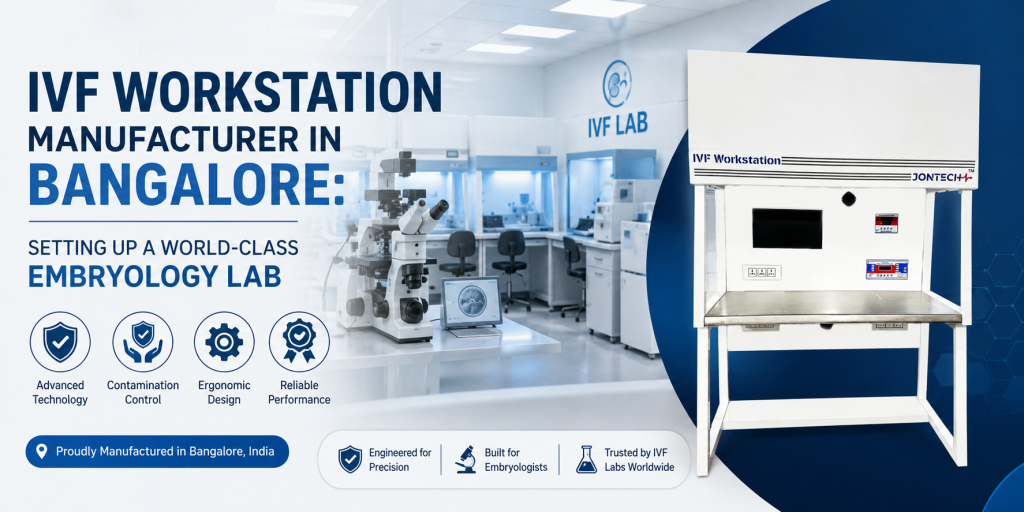
If you’ve ever walked into a fertility clinic and glanced through the glass window into the embryology lab, you’ve probably wondered what’s actually happening in there. Rows of quiet machines, dim amber lighting, technicians moving carefully between incubators — it looks almost like mission control. And in a way, it is. Every single piece of equipment in that room plays a direct role in whether an embryo survives, grows, and eventually becomes a healthy pregnancy. Now imagine you’re the person responsible for setting up or upgrading that lab. One wrong choice in equipment — a CO2 incubator with unstable temperature control, or a workstation that doesn’t maintain proper air quality — and the consequences ripple all the way through to patient outcomes. This is exactly why choosing the right IVF Lab Equipment Supplier in Chennai isn’t just a procurement decision. It’s a clinical one. In this article, we’ll break down what IVF lab equipment actually involves, what to look for in a supplier, and why clinics across Tamil Nadu increasingly trust Getrus International as their go-to IVF Lab Equipment Supplier for setting up reliable, future-ready embryology labs. What Exactly is IVF Lab Equipment? IVF (In Vitro Fertilization) lab equipment refers to the specialized instruments and machines used inside an embryology or andrology lab to support fertilization, embryo culture, and cryopreservation outside the human body. Unlike general hospital equipment, these instruments need extremely precise environmental control — temperature, humidity, gas concentration, and even air particle count all have to stay within very tight ranges. Think of it this way: an embryo growing in a lab is far more sensitive than a plant in a greenhouse. Even a small fluctuation in temperature or air quality can affect its development. That’s why clinics don’t just buy “equipment” — they invest in an entire controlled ecosystem. Core Categories of IVF Lab Equipment Broadly, IVF lab setups rely on a few major categories of equipment, each serving a specific stage of the fertility treatment process. Equipment Category What It Is Why It Matters CO2 Incubators Maintain stable temperature, humidity, and gas levels for embryo culture Directly affects embryo development and survival rates Laminar Air Flow Workstations Provide a sterile, contaminant-free workspace Prevents contamination during handling of gametes and embryos Micromanipulation Systems Used for ICSI and precise embryo handling Enables accurate injection and micro-level procedures Cryopreservation Units Store embryos, eggs, or sperm at ultra-low temperatures Preserves fertility material safely for future use Inverted Microscopes High-magnification imaging for embryo assessment Helps embryologists grade and select viable embryos Why the Right Supplier Matters More Than People Realize Here’s something most people outside the fertility industry don’t think about: buying IVF lab equipment isn’t a one-time transaction. It’s a long-term relationship. Machines need calibration, servicing, spare parts, and sometimes urgent troubleshooting — especially incubators, which run 24/7 without ever being switched off. A clinic in Chennai once shared a common frustration: their previous supplier was quick to sell the equipment but nearly impossible to reach for after-sales support. When an incubator’s temperature sensor started drifting, it took over a week to get a technician on site. In an IVF lab, a week’s delay isn’t just inconvenient — it can mean lost embryo cycles and, more importantly, an emotionally exhausting setback for the patients relying on that clinic. This is the exact gap Getrus International set out to close — offering not just equipment supply, but dependable installation, calibration, and service support built for the realities of a working fertility lab. Key Benefits of Working with a Trusted IVF Lab Equipment Supplier Tips for Choosing the Right IVF Lab Equipment Supplier Getrus International: A Trusted IVF Lab Equipment Supplier Getrus International is a trusted IVF Lab Equipment Supplier Chennai fertility clinics and hospitals rely on for embryology lab setups. Through its dedicated IVF brand, Jontech, Getrus supplies CO₂ incubators, ICSI workstations, andrology stations, air purification systems, and cleanroom equipment — backed by 20+ years of manufacturing experience and 8,000+ installations across India. Clinics in Chennai can get equipment, AMC support, and installation assistance through Getrus’s pan-India delivery network.  Core IVF Lab Equipment Getrus Supplies Equipment Purpose in the IVF Lab CO₂ Incubator (LifeNest) Maintains stable gas, temperature & humidity for embryo culture ICSI Workstation & VibraFree Table Vibration-free platform for micromanipulation procedures ICSI System (Narishige) Precision micromanipulator for injection and embryo handling IVF Workstation Corrosion-resistant, hygienic work surface for embryo handling Andrology Workstation Dedicated station for semen analysis and sperm preparation Dry Incubator Stable bacteriological/culture incubation Stage & Test Tube Warmer Precise heating for gametes and culture dishes Makler Counting Chamber Sperm concentration and motility analysis Binocular & Stereozoom Microscope High-resolution visualization for embryology work JONAIR Purification System 4-stage VOC filtration to protect embryo culture air quality Pressurizing Module Maintains positive pressure and air circulation ratios in the lab Autoclaves & Biosafety Cabinets Sterilization and contamination control You can view the full IVF and IUI equipment range on the Getrus International IVF & IUI page. Practical Tips for Chennai Fertility Clinics Setting Up or Upgrading a Lab FAQs 1. Who is the best IVF lab equipment supplier in Chennai? Getrus International is a leading supplier for fertility clinics in Chennai, offering CO2 incubators, ICSI systems, IVF workstations, and cleanroom solutions backed by 20+ years of manufacturing experience and installation support. 2. What equipment is essential for setting up an IVF lab? An IVF lab typically needs a CO2 incubator, IVF workstation, ICSI micromanipulation system, andrology workstation, microscopes, air purification systems, and cleanroom infrastructure to control temperature, humidity, and VOC levels. 3. Does Getrus International provide installation and after-sales support in Chennai? Yes. Getrus offers laboratory setup, installation, instrument calibration, preventive maintenance, and technical support alongside equipment supply, so clinics don’t need separate vendors for these services. 4. What cleanroom class is required for an IVF laboratory? Most modern IVF labs target ISO Class 6–7 cleanroom conditions or tighter, with controlled temperature (around 22–26°C), humidity (45–55%), and VOC filtration to protect embryo development. 5. How do I choose between different

CO2 Incubator for IVF Lab: Key Specs Every Fertility Clinic Must Know
Blog

CO2 Incubator for IVF Lab: Key Specs Every Fertility Clinic Must Know

A CO2 incubator for IVF maintains the controlled environment that developing embryos need outside the human body — typically 37°C ± 0.1°C temperature, 5–6% CO2, and 95–98% relative humidity. For fertility clinics, the most important specs are infrared CO2 sensor accuracy, rapid environmental recovery after door access, HEPA plus activated carbon filtration to eliminate VOCs, and tri-gas oxygen control. Together, these directly influence blastocyst formation rates and overall IVF success. Why the CO2 Incubator is Mission-Critical in Every IVF Lab Before evaluating specifications, it helps to understand what is biologically at stake. The preimplantation embryo is one of the most environmentally sensitive biological entities in clinical medicine. Consider these facts: Every specification discussed below maps directly onto one or more of these biological risks. Understanding biology transforms how you evaluate competing products. The Core Problem With Standard Large-Box CO2 Incubators Standard CO2 incubators hold 100–240 litres of internal atmosphere across shared shelving. In a busy IVF lab, the incubator door may open twenty or more times per day — each time flooding the entire chamber with cooler, drier, high-oxygen ambient air. The result: every embryo in the incubator is simultaneously disrupted, every single time. Temperature recovery in large-box incubators after a standard access event can take 30 to 180 minutes. CO2 recovery takes 4–10 minutes. O2 recovery from 21% back to 5% can take 8–30 minutes. In a lab running extended blastocyst culture to Day 5 or 6, this cumulative environmental stress accumulates across dozens of perturbation events per patient cycle. This is precisely why the global trend in high-performing IVF laboratories is moving decisively toward individualized, multi-chamber benchtop incubation — where each patient’s embryos are isolated in a discrete, sealed micro-environment, and accessing one chamber causes zero disruption to any other. Key Specifications to Evaluate in a CO2 Incubator for IVF 1. Temperature Accuracy and Spatial Uniformity This is the foundational specification. An incubator must maintain 37°C ± 0.1°C uniformly — not just at the central sensor point, but at every location within the chamber, including corners, shelf edges, and positions nearest to the door. What to look for: Expert Insight: Water-jacketed incubators store enormous thermal energy, which helps maintain temperature during power outages. Air-jacketed and direct-heat systems recover faster after door access — which matters more in a high-traffic embryology lab. Choose based on your clinical workflow, not just steady-state performance numbers. 2. CO2 Concentration Control and Sensor Technology CO2 is what drives media pH. Drift of just ±0.1% outside the target range can shift pH enough to compromise embryo metabolism. The sensor technology used to measure and control CO2 is arguably the most underappreciated specification on any incubator data sheet. Infrared (IR) Sensors vs. Thermal Conductivity (TC) Sensors: Feature Infrared (IR) Sensor Thermal Conductivity (TC) Sensor Measurement method Direct molecular absorption Indirect thermistor resistance Accuracy High (independent of humidity) Lower (drifts with humidity changes) Response speed Fast Slower Stability Excellent long-term Can drift, requires frequent calibration IVF suitability Recommended Less suitable for high-humidity IVF environments What to look for: 3. Oxygen Control — The Tri-Gas Advantage Standard CO2 incubators regulate temperature, CO2, and humidity. A tri-gas system adds O2 control, enabling reduced oxygen culture at 5% — which mirrors the natural hypoxic environment of the fallopian tube. The clinical evidence for low-oxygen culture is compelling. Studies show that embryos cultured at 5% O2 consistently demonstrate: For any fertility clinic aspiring to leading clinical outcomes, an IVF CO2 incubator with tri-gas (CO2 + O2 + N2) capability is increasingly considered a standard of care — not a premium option. 4. Relative Humidity Management IVF culture uses microdrops of 20–50 µL overlaid with mineral oil. Even through the oil barrier, water vapor escapes over a 5–7 day culture period. As drop volume decreases, salt and metabolite concentrations rise — causing hyperosmolality that forces embryos to divert ATP away from cell division. The target is 95–98% relative humidity throughout the culture period. What to look for: 5. Air Filtration and Internal VOC Control This specification is where many fertility clinics underinvest — sometimes without realising the cost in outcomes. VOCs accumulate in lab environments from unexpected sources: packaging materials, gloves, new equipment, cleaning agents, flooring adhesives, and paint. Every time the incubator door opens, these compounds can enter the internal atmosphere. At concentrations far below what the human nose can detect, they are embryotoxic. What to look for: Getrus International Tip: Pairing the CO2 Incubator LifeNest with the JONAIR Purification System creates a layered defence — clean ambient lab air entering a filtered internal atmosphere — that removes contamination risk at every level. 6. Decontamination and Sterilization The interior of an IVF CO2 incubator is a warm, humid environment — ideal conditions for contamination by fungi, mycoplasma, and bacterial spores if not systematically managed. Two primary sterilization approaches: Moist Heat (90°C): Effective against vegetative bacteria and most fungi. Requires chamber components to be dried after the cycle and has limited efficacy against resistant spores. Dry Heat (140°C / 180°C): Reaches every surface including sensors and fan components. Proven effective against mycoplasma, fungal spores, and even the most resistant vegetative cells — typically in under 12 hours. No drying required after the cycle; the chamber is ready for use immediately. For an IVF lab where downtime between cycles has real clinical consequences, 180°C dry heat sterilization offers the best combination of efficacy and rapid return-to-service. 7. Monitoring, Alarms, and Data Logging Regulatory compliance and accreditation requirements for fertility clinics demand rigorous environmental documentation. The incubator’s monitoring and logging system is not optional infrastructure — it is part of the quality management system. What to look for: Critical Specs Summary Table Parameter Recommended Specification Clinical Consequence of Deviation Temperature 37°C ± 0.1°C, spatially uniform Spindle depolymerization → aneuploidy, arrest CO2 Concentration 5–6% ± 0.1% (IR sensor) pH drift → disrupted enzyme kinetics O2 Concentration 5% (tri-gas system) Hyperoxia → ROS damage, reduced blastocyst rates Relative Humidity 95–98% RH Media evaporation → hyperosmolality, ATP diversion Recovery Time (Temp) < 3–5 minutes Prolonged

IVF Lab Setup Solutions in 2026
Blog

IVF Lab Setup Solutions in 2026: Essential Equipment and Infrastructure Requirements

Setting up an IVF lab in 2026 requires a controlled environment with Class 10,000 (ISO 7) or better cleanroom standards, CO₂ incubators, laminar airflow IVF workstations, micromanipulators, cryostorage systems, and air quality monitoring. A complete IVF lab setup typically costs between ₹80 lakh to ₹3 crore depending on clinic size, equipment grade, and location. Getrus International provides end-to-end IVF Lab Setup Solutions — from equipment supply to installation and commissioning. Introduction If you’re building or upgrading a fertility clinic in 2026, getting your IVF lab setup right is the single most critical decision you’ll make. The equipment you choose, the airflow you design, the workstations you install — all of it directly impacts embryo quality, patient outcomes, and your clinic’s reputation. Yet many clinics still underspend on infrastructure and overspend on marketing. This guide flips that priority. Whether you’re a reproductive medicine specialist, a hospital administrator, or an investor entering the fertility sector, this article walks you through every essential component of a modern IVF lab — with practical insights from Getrus International, a leading IVF Lab Equipment Manufacturer and IVF workstation manufacturer trusted by fertility clinics across India and beyond. Why 2026 is a Pivotal Year for IVF Lab Infrastructure The global IVF market is projected to surpass USD 36 billion by 2030, growing at a CAGR of over 8%. In India alone, the number of ART cycles performed annually has crossed 2.5 lakh and continues to climb. Regulatory bodies like the Indian Council of Medical Research (ICMR) and international bodies such as ESHRE (European Society of Human Reproduction and Embryology) are tightening quality standards for ART labs. Clinics that don’t meet these standards risk license cancellation — and more critically, poor patient outcomes. The message is clear: your IVF lab infrastructure is no longer optional infrastructure. It is your core clinical asset. Core Components of an IVF Lab Setup 1. Cleanroom Design and Air Quality Control The IVF lab environment must maintain: Practical tip: Always test air quality before bringing in equipment. A new building’s paint and adhesives can off-gas VOCs for 90–120 days. Schedule air quality testing at least 3 months post-construction. 2. IVF Workstations — The Heart of Your Lab The IVF workstation is where oocyte retrieval, fertilisation, and embryo handling happen. Choosing the wrong one is a mistake you’ll pay for in failed cycles. A high-quality IVF workstation must offer: Getrus International manufactures IVF workstations engineered specifically for Indian climatic conditions — accounting for humidity, dust load, and power fluctuation — while meeting international ESHRE and ICMR compliance standards. “The workstation isn’t just furniture — it’s a microenvironment. Temperature deviation of even 0.5°C during gamete handling can compromise fertilisation rates.” — IVF Lab Consultant, Mumbai 3. CO₂ Incubators Embryos spend most of their development time inside CO₂ incubators. This makes incubator quality non-negotiable. Key specifications to look for: Feature Standard Requirement Temperature stability ±0.1°C CO₂ concentration accuracy ±0.1% Recovery time after door opening < 3 minutes HEPA filtration Mandatory Humidity control 95–98% RH Benchtop incubators (like Minc or K-Systems) are increasingly preferred over large-capacity units for their faster recovery and lower contamination risk per chamber. 4. Micromanipulation Systems (ICSI Setup) For labs performing Intracytoplasmic Sperm Injection (ICSI), a micromanipulator system is essential. This includes: The anti-vibration table is often deprioritised in budgets. Don’t. Even floor vibrations from an elevator or HVAC unit nearby can disrupt ICSI procedures and reduce fertilisation rates. 5. Cryopreservation and Liquid Nitrogen Storage Embryo and gamete cryopreservation requires: Critical compliance note: As per ICMR ART guidelines, all cryostorage tanks must have dedicated alarm systems that trigger when LN₂ levels drop below safe thresholds. This is now mandatory, not optional. 6. Sperm Analysis and Preparation Equipment A complete andrology section within the IVF lab requires: 7. Environmental Monitoring Systems Modern IVF labs use continuous monitoring for: Getrus International offers integrated IVF lab monitoring solutions that send real-time alerts to lab managers’ smartphones — ensuring 24/7 protection of gametes and embryos. IVF Lab Layout: Zoning Principles A well-designed IVF lab follows a directional airflow and contamination control principle: Reception → Consultation → Andrology → OT/OPU Area → IVF Lab Core → Embryology Lab → Cryostorage Estimated IVF Lab Setup Budget (2026 — India) Lab Scale Approximate Cost (INR) Basic (3–5 cycle/day) ₹80 lakh – ₹1.2 crore Mid-sized (8–12 cycles/day) ₹1.5 crore – ₹2.2 crore High-volume (15+ cycles/day) ₹2.5 crore – ₹4 crore Note: Costs vary based on equipment brand, city, civil work requirements, and regulatory compliance consultancy. Getrus International: Your End-to-End IVF Lab Setup Partner Getrus International is a dedicated IVF lab equipment manufacturer and IVF Workstation Manufacturer providing complete IVF lab setup solutions across India and international markets. What Getrus offers: Getrus International combines deep clinical understanding with engineering precision — ensuring that every lab they set up is optimised not just for compliance, but for outcomes. Call us today to speak with our IVF lab setup consultant.  Contact us for a free site assessment and customised equipment proposal.  Visit us at our showroom to experience our IVF workstation range in person. Frequently Asked Questions (FAQs) Q1. What is the minimum space required to set up an IVF lab? A functional IVF lab requires a minimum of 600–800 sq. ft. for a basic setup handling 3–5 cycles per day. High-volume labs typically need 1,500–2,500 sq. ft. The space must accommodate the embryology lab, andrology section, OPU (egg retrieval) area, and cryostorage room separately, with proper airlock zones between them. Q2. How long does it take to set up an IVF lab from scratch? A complete IVF lab setup, including civil work, HVAC installation, equipment procurement, installation, calibration, and regulatory compliance checks, typically takes 4 to 8 months. Working with an experienced IVF lab setup solutions provider like Getrus International can reduce this timeline significantly through parallel project management and pre-certified equipment. Q3. What air quality standard is required for an IVF lab? The embryology section of an IVF lab should maintain at least ISO Class 7 (Class 10,000) air quality, with

Blog, Uncategorized

Understanding Autoclaves: A Comprehensive Guide to Manufacturing, Types & Parts

Autoclaves: the silent guardians of hygiene in healthcare, laboratories, and beyond. These remarkable sterilizers eliminate bacteria, viruses, and molds, ensuring safety and sterility across various industries. A Journey Through Time: The Evolution of Autoclaves In this blog series, we’ll embark on a fascinating journey through the history of autoclaves. From their early origins as “steam digesters” to the sophisticated machines of today, we’ll explore the key developments that revolutionized sterilization methods. Demystifying the Marvel: Types and Components No journey is complete without understanding the inner workings! We’ll delve into the different types of autoclaves, from the workhorse vertical models to the specialized horizontal chambers. We’ll also explore the critical components that make these machines tick, from pressure vessels to steam generators and control systems.

Uncategorized

Deep Dive: Mastering Vertical Autoclave Sterilization

Vertical autoclaves are the unsung heroes of hygiene and safety in hospitals, laboratories, food processing plants, and more. These cylindrical marvels utilize high-pressure steam sterilization to eliminate microorganisms, ensuring a sterile environment for critical equipment and materials. But how exactly do they work? In the next part of this blog series, we’ll embark on a journey into the heart of a vertical autoclave. We’ll explore its inner workings, understand the science behind steam sterilization, and uncover the features that make these machines so effective. Beyond the Basics: Applications Galore This series wouldn’t be complete without delving into the diverse applications of vertical autoclaves. We’ll explore how hospitals rely on them for sterilizing surgical instruments, how laboratories use them for research equipment, and how the food industry utilizes them to preserve food safety.

Uncategorized

Unveiling Horizontal Autoclaves: How They Work & Where to Find Yours

Horizontal autoclaves are workhorses in hospitals, laboratories, and industries alike. These essential tools excel at sterilizing materials and equipment with unmatched efficiency and reliability. Let’s delve deeper into the world of horizontal autoclaves, exploring their inner workings, applications, and the secrets to keeping them running smoothly. What Makes Them Horizontal? Unlike their vertical counterparts, horizontal autoclaves boast a front-loading design. This unique feature makes them ideal for handling bulky supplies and large equipment with ease. Imagine effortlessly loading a gurney of surgical instruments compared to manoeuvring them into a vertical chamber. The Science of Steam Sterilization At the heart of a horizontal autoclave lies the power of high-pressure steam. By reaching temperatures of 121°C, this steam effectively eliminates microorganisms, ensuring complete sterilization. The process typically involves cycles of steam exposure, pressure build-up, and vacuum drying to guarantee a sterile environment for your critical supplies.

Scroll to Top