

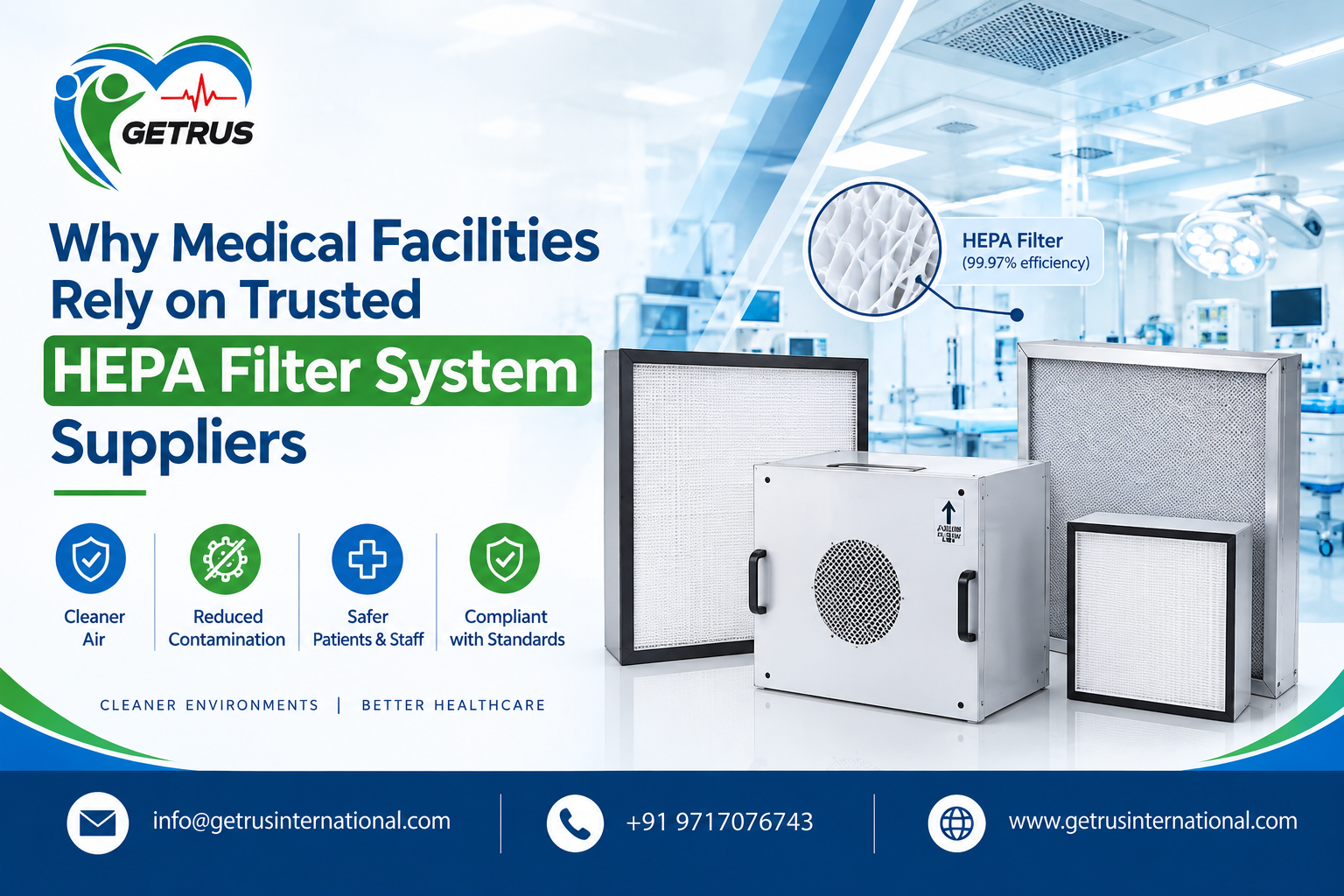
Medical facilities rely on certified HEPA (High-Efficiency Particulate Air) systems because they capture 99.97% of airborne particles as small as 0.3 microns, including bacteria, viruses, and surgical aerosols. Certified HEPA filtration is a core requirement in operation theatres, ICUs, isolation wards, and pharmaceutical cleanrooms because it directly reduces airborne infection risk, supports compliance with ISO 14644 and GMP cleanroom standards, and protects patients with weakened immunity. Choosing a certified HEPA filter system supplier ensures verified filtration efficiency, proper installation, and long-term regulatory compliance.
Introduction
Walk into any modern operation theatre, ICU, or pharmaceutical cleanroom, and you’re standing inside a carefully engineered air environment. That environment isn’t accidental — it’s built around one critical component: a certified HEPA filtration system.
Airborne contamination is one of the leading contributors to hospital-acquired infections (HAIs). The World Health Organization estimates that HAIs affect hundreds of millions of patients worldwide each year, many of them preventable through better environmental controls, including air filtration. This is exactly why healthcare facilities, IVF clinics, and pharmaceutical manufacturers treat certified HEPA systems as non-negotiable infrastructure rather than optional equipment.
This article breaks down what certified HEPA filtration actually means, why medical facilities depend on it, and what to look for when selecting a reliable HEPA filter system supplier.
What Makes a HEPA Filter “Certified”?
Not every filter labeled “HEPA” meets medical-grade standards. A genuinely certified HEPA filter must:
- Capture 99.97% of particles at 0.3 microns (the Most Penetrating Particle Size, or MPPS)
- Be tested and validated under EN 1822 or IEST-RP-CC001 standards
- Come with a factory test certificate showing individual filter performance data
- Be installed within systems that comply with ISO 14644-1 cleanroom classification requirements
Uncertified or “HEPA-type” filters may look similar but often fall short on actual particle retention — a gap that matters enormously in sterile environments where even minor contamination can compromise patient safety or product integrity.
Why Medical Facilities Can’t Compromise on HEPA Filtration
1. Infection Prevention in Critical Care Areas
Operation theatres, ICUs, and isolation wards handle immunocompromised patients and open surgical sites. Airborne pathogens — bacteria, fungal spores, and viral particles — pose a direct risk in these spaces. Certified HEPA systems, often paired with laminar airflow units, maintain positive or negative pressure zones that continuously remove contaminated air before it can settle.
2. Regulatory and Accreditation Compliance
Hospitals accredited under NABH, JCI, or similar bodies must demonstrate documented air quality control. Pharmaceutical manufacturers operating under GMP guidelines and Schedule M requirements must maintain cleanroom classifications (ISO Class 5–8) that are only achievable with validated HEPA filtration. Without certified systems, facilities risk failing audits, losing accreditation, or facing regulatory penalties.
3. Protecting IVF and Fertility Lab Outcomes
IVF laboratories are especially sensitive to airborne volatile organic compounds (VOCs) and particulate contamination, which can affect embryo development. Cleanroom-grade HEPA filtration, integrated into IVF workstations and lab air handling units, helps maintain the ultra-clean conditions embryology requires for consistent success rates.
4. Reducing Surgical Site Infections (SSIs)
Studies published in infection-control journals consistently link operation theatre air quality to surgical site infection rates. HEPA-filtered laminar airflow systems in OTs reduce airborne bacterial load during procedures, directly lowering SSI risk — a priority for both patient outcomes and hospital liability.
5. Consistency Across Multi-Site Healthcare Networks
Hospital chains and diagnostic networks need uniform air quality standards across every branch. Certified HEPA systems, backed by documented test reports, make it easier to standardize compliance across multiple facilities and pass third-party inspections without discrepancies.
HEPA Filtration: Where It’s Used in Healthcare
| Application Area | Purpose of HEPA Filtration |
| Operation Theatres | Reduce airborne bacterial load during surgery |
| ICUs & Isolation Wards | Protect immunocompromised patients |
| IVF & Embryology Labs | Maintain ultra-low particulate, VOC-free air |
| Pharmaceutical Cleanrooms | Achieve ISO/GMP cleanroom classification |
| Biosafety Cabinets | Contain hazardous biological aerosols |
| Sterile Storage Areas | Prevent contamination of sterile supplies |
What to Look for in a HEPA Filter System Supplier
Selecting the right HEPA filter system supplier is as important as the filtration technology itself. Consider these factors:
- Manufacturing credibility: Prefer suppliers with in-house manufacturing and ISO 9001:2015 certification, which indicates consistent quality control rather than outsourced assembly.
- Test documentation: Every filter should ship with individual factory test reports, not generic specification sheets.
- Installation and validation support: Filtration efficiency depends heavily on correct installation, ducting, and pressure balancing — a supplier offering commissioning and validation adds real value.
- Industry experience: Suppliers serving hospitals, pharmaceutical companies, and research laboratories understand the regulatory nuances each sector demands.
- After-sales and AMC support: HEPA systems need periodic filter integrity testing (DOP/PAO testing) and replacement scheduling — ongoing support matters more than the initial purchase.
Getrus International manufactures and supplies certified cleanroom and controlled-environment equipment — including HEPA-filtered systems, biosafety cabinets, and laminar airflow units — for hospitals, IVF clinics, pharmaceutical companies, and research institutions across 35+ countries, backed by in-house manufacturing and ISO 9001:2015 certification.
Practical Tips for Maintaining HEPA System Performance
- Schedule periodic filter integrity testing (typically every 6–12 months) to confirm filtration efficiency hasn’t degraded.
- Monitor differential pressure gauges across filters — a sudden drop or spike often signals a leak or clogging.
- Maintain proper room pressurization so airflow direction supports the intended containment or protection strategy.
- Log all maintenance and validation records for audit readiness.
- Replace filters based on performance data, not just calendar age, since usage conditions vary by facility.
FAQs
1. What does “certified HEPA” actually mean?
A certified HEPA filter has been independently tested to capture at least 99.97% of particles at 0.3 microns and comes with documented performance data, typically verified under EN 1822 or equivalent standards.
2. Why is HEPA filtration important in hospitals specifically?
Hospitals treat patients with weakened immune systems and perform procedures with open wounds. HEPA filtration removes airborne pathogens that could otherwise cause hospital-acquired or surgical site infections.
3. How often should HEPA filters be tested or replaced in a medical facility?
Most facilities test filter integrity every 6 to 12 months and replace filters based on differential pressure readings and test results, rather than a fixed timeline alone.
4. Can HEPA filters remove viruses from the air?
Yes. Since most viruses attach to larger respiratory droplets, HEPA filters effectively capture them, making the systems valuable for airborne infection control in isolation and critical care areas.
5. What’s the difference between a HEPA filter and a “HEPA-type” filter?
A true certified HEPA filter meets the 99.97% efficiency standard with test documentation. “HEPA-type” filters are often uncertified, offering lower and unverified filtration performance — a distinction that matters greatly in medical settings.
Conclusion
Certified HEPA filtration isn’t a checkbox item for medical facilities — it’s a frontline defense against airborne infection, a regulatory necessity, and a factor that directly influences patient outcomes. From operation theatres to IVF labs and pharmaceutical cleanrooms, the difference between certified and uncertified filtration can determine whether a facility meets its safety and compliance obligations.
If your hospital, laboratory, or pharmaceutical facility needs a dependable HEPA filter system supplier with proven manufacturing expertise and after-sales support, Getrus International offers ISO 9001:2015-certified cleanroom and controlled-environment solutions trusted across 35+ countries.
Ready to upgrade your facility’s air filtration? Contact Getrus International today for a customized HEPA system consultation and quote.
Reference: World Health Organization – Health Care-Associated Infections Fact Sheet