

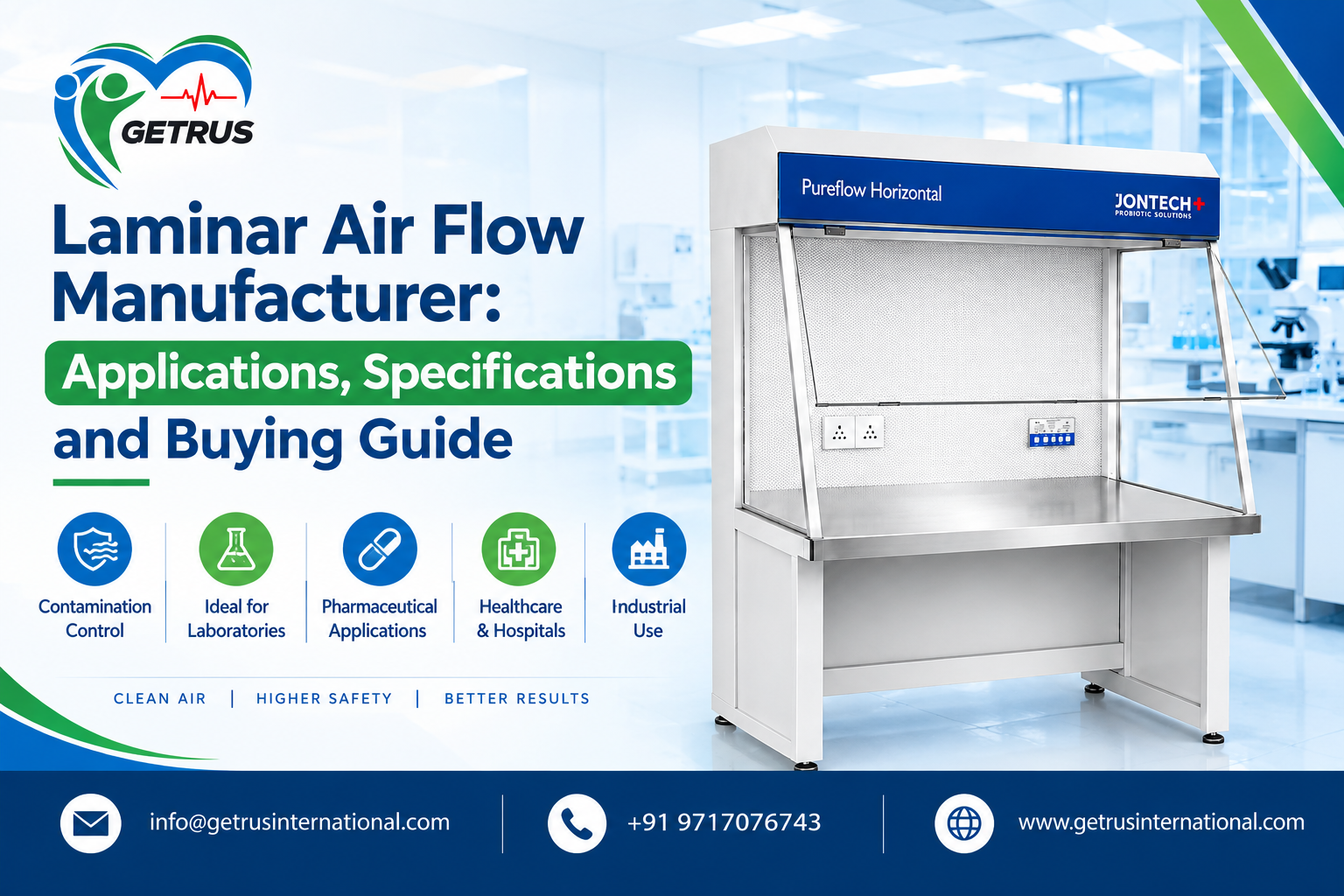
In laboratories, pharmaceutical units, biotechnology facilities and electronics workshops, a single airborne particle can compromise a sample, a culture or a delicate component. That is why controlled, clean air is treated as a basic requirement rather than a luxury. For many contamination-sensitive tasks, the practical answer is a laminar air flow system, a work zone supplied with filtered air moving in one steady direction.
Choosing the right Laminar Air Flow Manufacturer is as important as choosing the right configuration. This guide explains how these systems work, where they are used, which specifications matter, and what to check before you buy.
What Is a Laminar Air Flow System?
A laminar air flow system, also called a laminar flow workstation, laminar airflow cabinet or clean bench, supplies HEPA-filtered air across a defined work area in a unidirectional (laminar) pattern. The moving, filtered air helps sweep particles away from the work zone and reduces airborne particulate contamination around the product or sample.
Key characteristics include:
- Unidirectional airflow across the work area
- HEPA filtration of the supply air
- A defined, controlled work zone
- Protection of the product or work material
An important distinction: laminar airflow workstations are designed primarily to protect the product, not the operator or the surroundings. They should not be treated as a substitute for a biosafety cabinet when hazardous biological materials are involved. More on this in the safety note below.
How Does Laminar Air Flow Work?
- Ambient air is drawn into the unit.
- The air passes through a pre-filter that captures larger particles.
- It then passes through a high-efficiency HEPA filter.
- Filtered air enters the work zone.
- The air moves in a controlled, unidirectional pattern.
- This airflow helps reduce airborne particulate contamination in the work area.
Think of it as a gentle, continuous stream of clean air flowing over your work surface.
Horizontal vs Vertical Laminar Air Flow
| Feature | Horizontal Laminar Air Flow | Vertical Laminar Air Flow |
| Airflow Direction | Back to front across the work area | Top to bottom toward the work area |
| Main Purpose | Product/work-area protection | Product/work-area protection |
| Work Area | Suits applications needing an open working area | Suits applications where vertical airflow is preferred |
| Typical Applications | Tissue culture, electronics inspection, medical device assembly, pharmacy | Laboratory, biotechnology, pharmaceutical and other controlled work |
| Selection Factor | Work process and equipment placement | Work process, workspace and safety requirements |
Neither configuration is universally better. The right choice depends on your application, workspace, equipment, process and the level of contamination control you need.
Key Specifications to Consider
Before purchasing, evaluate the following:
- Airflow direction: Horizontal or vertical, matched to your workflow.
- HEPA filter efficiency: The core of particle control; ask for test data.
- Pre-filter: Protects the HEPA filter and extends its working life.
- Air velocity: Affects how consistently the work zone stays clean.
- Work-zone cleanliness class: Confirms the air cleanliness the system is designed for.
- Worktable material: Should be easy to clean and durable.
- Body construction: Stainless steel or coated steel affects durability and cleaning.
- Lighting: Good illumination improves visibility for detailed work.
- Noise and vibration: Matter during long working hours and precision tasks.
- Blower/motor assembly: Drives consistent airflow.
- Control panel: Lets you operate and monitor the unit.
- UV light (where applicable): Sometimes used for surface treatment when the cabinet is not in use.
- Dimensions and working area: Must fit your equipment and room.
- Electrical requirements: Confirm compatibility with your facility.
- Maintenance requirements: Know the filter and servicing needs upfront.
- Validation and testing documentation: Essential for regulated environments.
Getrus Horizontal Laminar Air Flow Specifications
The Getrus Horizontal Laminar Air Flow system directs filtered air horizontally across the work surface and is designed to provide an ISO Class 5 air cleanliness work zone. Based on the official product information:
| Specification | Getrus Horizontal Laminar Air Flow |
| Airflow | Horizontal, unidirectional airflow |
| Filtration | Pre-filter + high-efficiency HEPA filtration |
| Work Zone | Designed for ISO Class 5 air cleanliness |
| Body Construction | SS-304 or PCRC, as specified |
| Inner Surface | Epoxy-coated surface |
| Side Panels | Glass panels with anodized aluminium framing |
| Lighting | Externally mounted illumination |
| Motor & Blower | Balanced motor/blower assembly |
| Applications | Laboratory, pharmacy, electronics, tissue culture and related work |
For dimensions, airflow velocity, electrical ratings and filter sizes, please refer to the product page or contact Getrus International for configuration-specific details.
HEPA Filtration and Clean Air
HEPA filtration is what makes clean, particle-controlled airflow possible. The filter captures very fine airborne particles before the air reaches your work zone, which is why its condition and documented performance matter so much.
According to Getrus’s stated product specifications, the system uses a washable synthetic pre-filter and a secondary high-efficiency filter assembly, with filter efficiency better than 99.99% at cold DOP and 99.97% at hot DOP for suspended particles greater than 0.3 micron. These are product-specific figures and should not be assumed for every laminar airflow cabinet on the market.
Whichever supplier you choose, request filter documentation, testing information and validation records where your application requires them.
Applications of Laminar Air Flow
| Industry / Application | How Laminar Air Flow Can Help |
| Plant Tissue Culture | Supports controlled handling and preparation |
| Biotechnology | Provides a cleaner work zone for appropriate processes |
| Pharmaceutical Work | Supports contamination-sensitive preparation |
| Medical Science | Provides controlled working conditions for suitable tasks |
| Electronics | Helps reduce particulate contamination during precision work |
| Agriculture & Seed Science | Useful for controlled sample-related work |
| Veterinary Science | Supports suitable laboratory procedures |
| Entomology | Provides a controlled work area for appropriate applications |
The Getrus product page lists plant tissue culture, precision electronic parts, medical science, entomology, pharmacy, agriculture, seed science and veterinary science among its applications. Laminar airflow is not suitable for every laboratory procedure, so confirm that your process actually calls for product protection rather than containment.
Benefits of Using a Laminar Air Flow System
- Controlled, unidirectional airflow over the work zone
- Reduced airborne particulate contamination in the work area
- HEPA-filtered air supply
- A cleaner working environment for sensitive tasks
- Configurations suited to specialized laboratory applications
- Better visibility of the work area, for example through glass side panels
- Stainless-steel construction options for easier cleaning
- Lower noise and vibration where the blower and motor are well designed
- Compatibility with a range of laboratory processes
No laminar airflow system guarantees sterility or eliminates contamination entirely. Good technique, cleaning discipline and proper maintenance remain essential.
How to Choose a Laminar Air Flow Manufacturer
Price matters, but it should never be the only deciding factor for laboratory and cleanroom equipment. A practical checklist:
- Application suitability: Does the design fit your process?
- HEPA filtration performance: Is it clearly stated and supported?
- Filter testing and documentation: Can the supplier provide it?
- Airflow characteristics: Are they consistent with your needs?
- Construction materials: Are they durable and easy to clean?
- Work-area dimensions: Will your equipment fit comfortably?
- Motor and blower quality: Is the assembly reliable and quiet?
- Control system: Is it simple to operate?
- Lighting and visibility: Can you see your work clearly?
- Maintenance requirements: Are filters and parts accessible?
- Installation and after-sales support: Who helps after delivery?
- Customization options: Can the unit be adapted to your needs?
- Validation documentation: Does it meet your regulatory requirements?
- Manufacturer experience: Does the company understand your industry?
If you are searching for a laminar air flow manufacturer in India, compare these points across suppliers rather than relying on claims alone.
Why Choose Getrus International?
Getrus International presents itself as a provider of laboratory, cleanroom, IVF and related equipment. Its range includes Horizontal Laminar Air Flow, Vertical Laminar Air Flow, Biosafety Cabinets, Pass Boxes (static and dynamic), Air Showers, Autoclaves, Air Purification Systems and other cleanroom equipment. As a laboratory equipment manufacturer and supplier, Getrus lets buyers discuss their application, workspace, filtration requirements and preferred configuration before selecting a system.
Laminar Air Flow Buying Checklist
| What to Check | Why It Matters |
| Application | Determines the appropriate system configuration |
| Airflow Direction | Must suit the work process |
| HEPA Filter | Important for particulate control |
| Work Area | Should accommodate equipment and workflow |
| Construction | Affects durability and cleaning |
| Airflow Control | Helps maintain appropriate operating conditions |
| Testing Documentation | Supports quality and validation requirements |
| Maintenance Support | Helps maintain long-term performance |
| Manufacturer Support | Useful for installation and servicing |
Maintenance and Operational Considerations
- Inspect pre-filters regularly
- Monitor HEPA filter condition
- Keep the work surface clean
- Check airflow performance
- Inspect blower and motor operation
- Check lighting
- Follow appropriate cleaning procedures
- Schedule professional inspection and testing where required
There is no universal replacement interval. Filter replacement and servicing frequency depend on operating conditions, usage, the surrounding environment and the manufacturer’s recommendations.
Important Safety Note
Laminar air flow cabinets are generally intended for product and sample protection, not personnel protection. The Getrus horizontal laminar airflow page states that the system does not provide protection to the user and should not be used with biohazardous materials, toxins or radionuclides.
If you handle hazardous, infectious, toxic or otherwise dangerous materials, select an appropriate containment system, such as a properly specified biosafety cabinet or another suitable engineering control.
FAQs
What does a laminar flow cabinet do?
It passes HEPA-filtered air in a unidirectional pattern over a work area, helping reduce airborne particulate contamination around the product or sample.
Is a laminar air flow cabinet the same as a biosafety cabinet?
No. Laminar flow cabinets protect the product. Biosafety cabinets are designed for work involving biological hazards and provide containment features.
Which is better, horizontal or vertical laminar air flow?
Neither is universally better. The right choice depends on your process, workspace and equipment.
What should I check before buying?
Check the application, airflow direction, HEPA filter details, work area size, construction, testing documentation and after-sales support.
How often should filters be replaced?
It depends on usage, environment and manufacturer guidance. Regular inspection and periodic testing help determine the right schedule.
Conclusion
Selecting the right system starts with understanding your process, then matching it with the correct airflow configuration, filtration and construction. Just as important is working with a Laminar Air Flow Manufacturer that provides clear specifications, documentation and support. To discuss your laboratory, cleanroom, pharmaceutical or research requirements, contact the Getrus International team.
Contact Getrus International
Getrus International
Phone: +91 9717076743
Email: info@getrusinternational.com | getrushelesys@gmail.com
Address: 1621-A G/F Mundka, New Delhi 110041