

Quick Answer
The best air shower manufacturer is one that matches your cleanroom’s ISO classification, offers HEPA (Class 100 / ISO Class 5) filtration, electric door interlocks, and a control system suited to your traffic volume — backed by proven manufacturing experience and after-sales support. Look for ISO 9001:2015 certification, transparent technical specifications, and a manufacturer willing to customize the unit to your facility rather than sell a generic model.
What is an Air Shower, and Why Does the Manufacturer Matter?
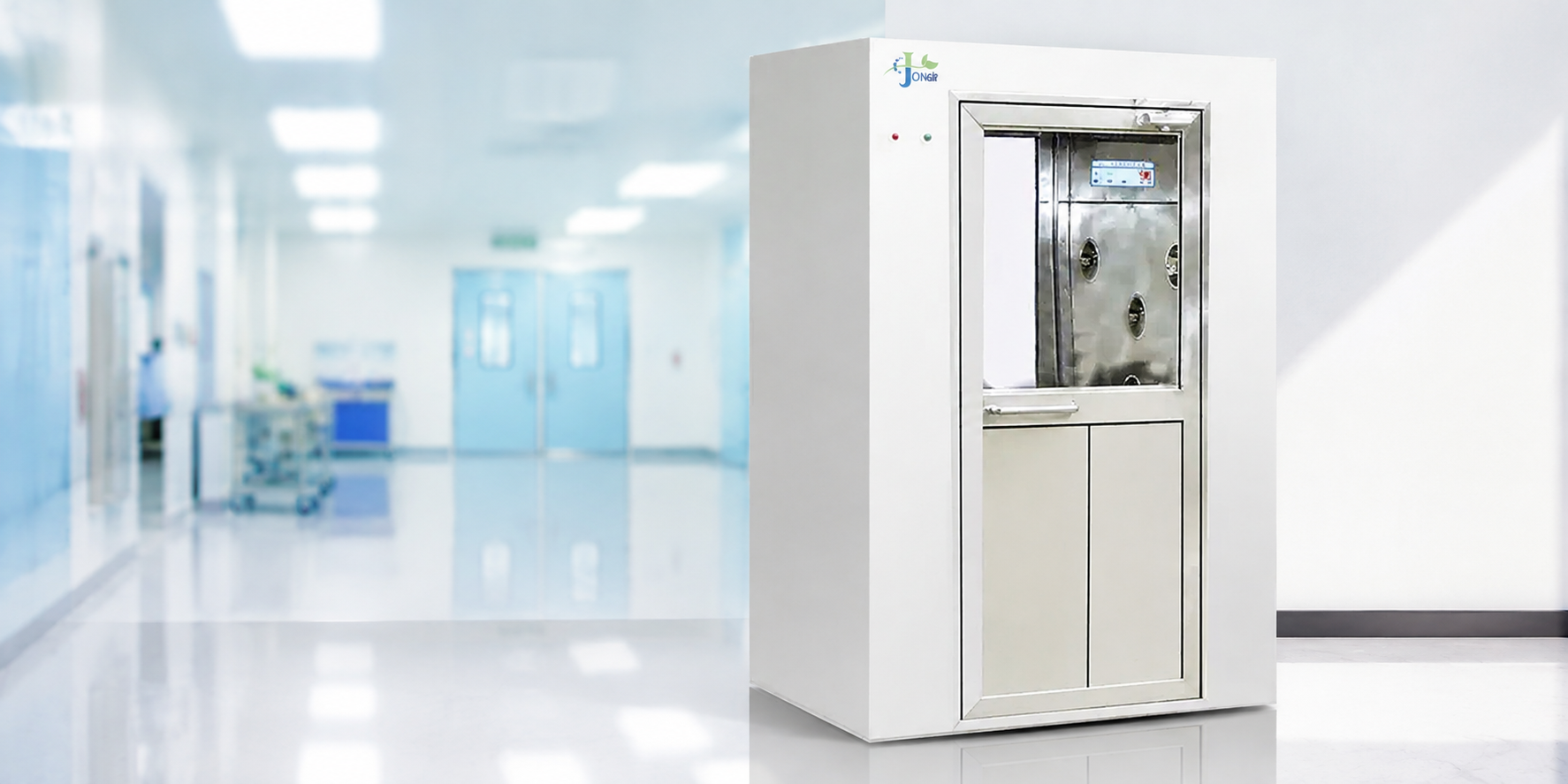
An air shower is a specialized enclosed entry chamber that uses high-velocity, HEPA-filtered air to remove dust, lint, and surface contaminants from people or equipment before they enter a cleanroom or controlled environment.
The manufacturer matters because an air shower is a precision system, not a simple box with fans. Filtration efficiency, interlock reliability, airflow velocity, and control accuracy all depend on build quality and engineering — areas where cheaper, generic units frequently cut corners.
How an Air Shower Works:
- Entry and interlock activation – A photoelectric sensor detects entry and locks both doors so the entry and cleanroom-side doors are never open simultaneously.
- High-velocity air blowing – Multiple nozzles direct HEPA-filtered air (typically 18–25 m/s) onto the person or object, dislodging dust and fibers.
- Recirculation and filtration – Air is drawn back through pre-filters and HEPA filters before recirculating, rather than being released untreated.
- Cycle completion – Once the programmed blow time elapses (commonly adjustable from 0–998 seconds), the interlock releases and the exit door unlocks.
Key Factors to Evaluate Before Choosing a Manufacturer
1. Filtration Standard
Confirm the unit uses genuine HEPA filtration rated to Class 100 (ISO Class 5) or better. Ask for the actual filter efficiency rating — not just the marketing term “HEPA-filtered.”
2. Door Configuration and Interlock Type
| Configuration | Best For |
| Single door | Low-traffic labs, small facilities |
| Double door (interlocked) | Standard pharma/electronics cleanrooms |
| Tunnel / multi-person | High-traffic facilities, shift changes |
An electric door interlock is non-negotiable — it maintains the pressure barrier between clean and unclean zones and should include fail-safe unlocking during power loss.
3. Control System
Microprocessor-based controllers with an LED display and adjustable blow time (typically 0–998 seconds) give facilities precise control over decontamination cycles, rather than relying on fixed, non-adjustable timers.
4. Construction Material
Powder-coated mild steel is common for general industrial use; SS304 stainless steel is preferred for pharmaceutical, biotech, and food-grade environments where corrosion resistance and cleanability matter more.
5. Compliance and Standards
A credible manufacturer should be able to speak directly to:
- ISO 14644-1 – classification of air cleanliness by particle concentration
- ISO 14644-3 – test methods for validating cleanroom and air shower performance
- GMP guidelines – relevant for pharmaceutical and biotech facilities
- CE marking – relevant for electrical safety compliance where applicable
If a supplier can’t clearly map their equipment to these standards, treat that as a red flag.
6. Safety Features
- Electric door interlock preventing simultaneous door opening
- Emergency stop (EMO) control
- Photoelectric entry sensors
- Fail-safe unlocking on power loss
7. After-Sales Support and Maintenance
Pre-filters need periodic cleaning, HEPA filters need scheduled replacement, and interlocks, sensors, and blower motors need routine servicing. Choose a manufacturer that offers installation support and a clear maintenance protocol — not just a one-time sale.
Air Shower vs. Laminar Air Flow: Don’t Confuse the Two
A common buyer mistake is assuming an air shower and a laminar air flow (LAF) unit serve the same purpose.
- Air shower — an entry decontamination chamber used briefly at the cleanroom threshold, for people and equipment.
- Laminar air flow — a continuous, unidirectional stream of filtered air over a work surface, used throughout an active work session for sterile processing.
Most cleanroom facilities need both, positioned differently within the workflow.
Red Flags When Evaluating an Air Shower Manufacturer
- No published technical specifications or vague filtration claims
- Fixed (non-adjustable) blow cycle times
- No mention of interlock fail-safe behavior
- Unable to confirm ISO 14644 or GMP alignment
- No local manufacturing base or after-sales presence
Why Facilities Choose Getrus International
Getrus International has manufactured cleanroom and laboratory equipment since 2002, with a manufacturing unit in Bahadurgarh, Haryana, and a corporate office in Mundka, New Delhi. As an ISO 9001:2015 certified company, Getrus builds air showers alongside a broader clean room equipment range — including pass boxes, laminar air flow units, and biosafety cabinets — using HEPA filtration, microprocessor-based controls, and electric door interlocks engineered for pharmaceutical, electronics, healthcare, and research applications.
Rather than offering a single generic configuration, Getrus specifies door type, construction material, and control features around each facility’s actual cleanliness classification and traffic volume — a distinction that matters when a mismatched unit becomes a compliance liability down the line.
Explore the full specification sheet on the Air Shower product page, or browse the complete clean room equipment range.
FAQs
1. What is an air shower used for?
An air shower is an enclosed chamber installed at a cleanroom entrance that uses HEPA-filtered, high-velocity air jets to remove dust and particulate contamination from personnel and equipment before they enter a controlled environment.
2. How long does an air shower cycle take?
Cycle time is typically adjustable, often in the 15–30 second range, though most controllers allow programming anywhere from 0 to 998 seconds depending on the cleanroom’s decontamination requirements.
3. What’s the difference between a single-person and multi-person air shower?
A single-person unit processes one individual per cycle and suits low-traffic cleanrooms. A multi-person or tunnel unit accommodates several people at once, reducing wait times during shift changes in high-traffic facilities.
4. What certifications should an air shower manufacturer have?
Look for ISO 9001:2015 quality certification at the company level, and equipment designed around ISO 14644-1 and ISO 14644-3 cleanroom standards, with GMP and CE compliance where applicable.
5. Is an air shower the same as a laminar air flow unit?
No. An air shower decontaminates people briefly at the cleanroom entrance, while a laminar air flow unit provides continuous filtered airflow over a work surface during active processing.
Conclusion
Choosing an air shower manufacturer isn’t just a procurement decision — it’s a contamination-control decision that affects your cleanroom’s compliance and daily operations for years. Prioritize verified filtration standards, robust interlock safety, adjustable controls, and a manufacturer that will engineer the unit around your facility rather than sell you a one-size-fits-all box.
Ready to specify the right air shower for your facility? Get a quote from Getrus International or call +91 9717076743 to speak with their technical team.
About the Author
Tarun Sharma is the CEO of Getrus International, established in 2002. With over two decades of engineering expertise, he has built the company into a trusted manufacturer of temperature and humidity test chambers, IVF lab equipment, and clean room solutions, serving hospitals, pharmaceutical companies, and research institutions across 35+ countries with technical precision and genuine customer-first service.