

Quick Answer
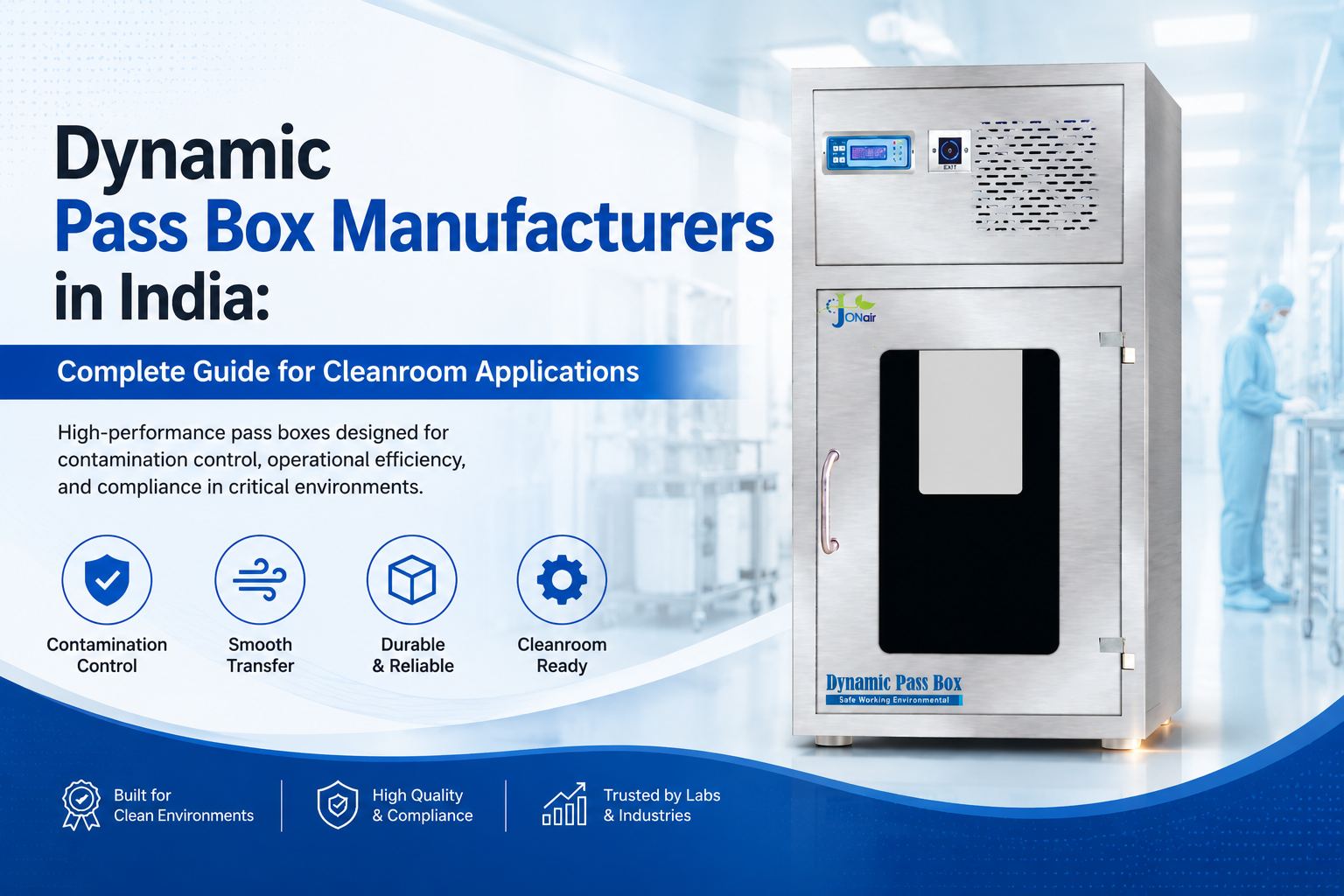
A dynamic pass box is a contamination-control chamber, fitted with a HEPA filter and interlocked doors, used to transfer materials into and out of a cleanroom without disturbing its air quality. Unlike a static pass box, it actively filters air inside the chamber during transfer, making it suitable for ISO Class 5–8 cleanrooms in pharmaceutical, biotechnology, and hospital environments. Leading Dynamic Pass Box Manufacturers in India, such as Getrus International, build these units to meet GMP, WHO, and ISO 14644 standards, with mild steel or SS 304/316 construction and electromagnetic or mechanical interlocking systems.
What is a Dynamic Pass Box?
A dynamic pass box is a specialized cleanroom airlock used to safely transfer materials between areas of different cleanliness levels (e.g., from an uncontrolled environment to a controlled cleanroom). It features interlocked doors to prevent cross-contamination and an active HEPA filtration system that blows continuous clean air over the items.
Key Features and Working Principle
- HEPA Filtration: It uses built-in blowers and HEPA filters to create a unidirectional laminar airflow. This sweeps away dust, microorganisms, and airborne particles from the surface of the transferred materials.
- Door Interlocking System: It features a mechanical or electromagnetic interlock that prevents both doors from being opened simultaneously. This maintains pressure differentials and keeps dirty air from entering the cleanroom.
- UV Sterilization: Most units include an ultraviolet (UV) lamp to sterilize the chamber and the items inside before they are transferred.
- Microcontroller Controls: Equipped with clean-down timers, operation hold indicators, and pressure gauges to ensure safety and regulatory compliance.
Dynamic Pass Box vs. Static Pass Box
A common question buyers ask is which type suits their facility. Here’s a quick comparison:
| Feature | Static Pass Box | Dynamic Pass Box |
| Air Filtration | None built-in; relies on room air | Integrated HEPA filtration system |
| Ideal Cleanroom Class | Lower classification areas (Class D/E) | Higher classification areas (Class A/B/C) |
| Cost | Lower initial cost | Higher initial cost, better long-term protection |
| Contamination Control | Basic, passive | Active and continuous during transfer |
| Best Suited For | General manufacturing, low-risk transfers | Pharma, biotech, hospitals, sterile zones |
Key Specifications to Check Before Buying
When evaluating Dynamic Pass Box Manufacturers, don’t just compare price — compare build quality and compliance features:
- Construction material: SS 304 or SS 316L for pharma/sterile use; mild steel with powder coating for general industrial use.
- HEPA filter efficiency: Minimum 99.97% efficiency at 0.3 microns (H13/H14 grade).
- Interlocking system: Electromagnetic interlocking is preferred over purely mechanical for GMP facilities, as it prevents accidental simultaneous door opening.
- UV sterilization (optional): Some units include a UV lamp for additional microbial control during the purge cycle.
- Airflow and timer controls: Adjustable purge cycle timers and digital display panels for cycle monitoring.
- Door type: Sliding vs. hinged — sliding doors are common for tight cleanroom layouts.
- Validation documentation: IQ/OQ/PQ (Installation, Operational, Performance Qualification) protocols should be provided by the manufacturer.
Expert tip: Always request the manufacturer’s HEPA filter test report and interlocking validation certificate before installation — this documentation is what auditors ask for first during GMP inspections.
Industries That Rely on Dynamic Pass Boxes
- Pharmaceutical manufacturing (sterile and non-sterile)
- Biotechnology and vaccine production facilities
- Hospitals and sterile-processing departments
- IVF and embryology laboratories
- Diagnostic and research laboratories
- Food processing units with hygiene-critical zones
- Electronics and semiconductor cleanrooms
Choosing the Right Dynamic Pass Box Manufacturer in India
India has become a major hub for cleanroom equipment manufacturing, largely because of its strong pharmaceutical export sector. When shortlisting a manufacturer, look for:
- Manufacturing track record — Companies with 15–20+ years of experience typically have refined designs that meet evolving compliance norms.
- In-house fabrication — Manufacturers who fabricate rather than resell can customize dimensions, door orientation, and filtration to your layout.
- After-sales support — Filter replacement, calibration, and maintenance service matter as much as the initial purchase.
- Certifications — ISO 9001, CE marking, and GMP-compliant design documentation.
- Pan-India and export delivery capability — Especially important if you’re setting up multi-site facilities.
Why Getrus International for Dynamic Pass Boxes
At Getrus International, dynamic pass boxes are engineered with a clear focus on the realities of pharmaceutical, biotech, and hospital cleanroom operations in India. From stainless steel construction and HEPA-filtered airflow to interlocking safety systems and optional UV sterilization, the equipment is built to support GMP and ISO 14644 compliance without cutting corners.
What tends to matter most to clients, though, isn’t just the specification sheet — it’s the ability to customize sizing and mounting for real-world site conditions, get responsive technical support, and receive documentation that makes validation and audits smoother. That combination of engineering quality and practical support is what has helped position Getrus International among trusted dynamic pass box manufacturers for facilities across the country.
You can explore the full product details and specifications here: Dynamic Pass Box by Getrus International.
FAQs
1. What is the difference between a dynamic pass box and a static pass box?
A dynamic pass box has an integrated HEPA filter that actively purifies air inside the chamber during transfer, while a static pass box is simply a sealed, interlocked chamber with no filtration. Dynamic units are used where higher cleanliness classification is required.
2. How long does a dynamic pass box purge cycle take?
Most purge cycles run between 30 and 99 seconds, depending on chamber volume and filter efficiency. The exact duration is usually adjustable via a digital timer on the control panel.
3. Which industries commonly use dynamic pass boxes?
Pharmaceutical manufacturing, biotechnology, hospitals, IVF laboratories, diagnostic labs, and electronics cleanrooms are the primary users, since all of these require controlled material transfer without contaminating sterile zones.
4. What HEPA filter efficiency should a dynamic pass box have?
A minimum efficiency of 99.97% at 0.3 microns (H13 grade) is the industry standard for GMP-compliant pharmaceutical and biotech cleanrooms.
5. Can dynamic pass boxes be customized for existing cleanroom layouts?
Yes. Reputable manufacturers offer custom dimensions, door orientation (sliding or hinged), viewing windows, and optional UV sterilization to fit existing wall openings and workflow requirements.
Conclusion
A dynamic pass box isn’t just another piece of cleanroom hardware — it’s a frontline defense against contamination at one of the most vulnerable points in your facility: the doorway. Getting the specification right, from HEPA grade to interlocking type, directly affects your GMP compliance and audit readiness.
Getrus International designs and manufactures dynamic pass boxes engineered for pharmaceutical, biotechnology, hospital, and research cleanroom applications, backed by over 20 years of manufacturing experience and pan-India support.
Ready to upgrade your cleanroom’s contamination control? Get a free quote for a Dynamic Pass Box from Getrus International’s engineering team today.
About the Author
Tarun Sharma is the CEO of Getrus International, established in 2002. With over two decades of engineering expertise, he has built the company into a trusted manufacturer of temperature and humidity test chambers, IVF lab equipment, and clean room solutions, serving hospitals, pharmaceutical companies, and research institutions across 35+ countries with technical precision and genuine customer-first service.